 Norway
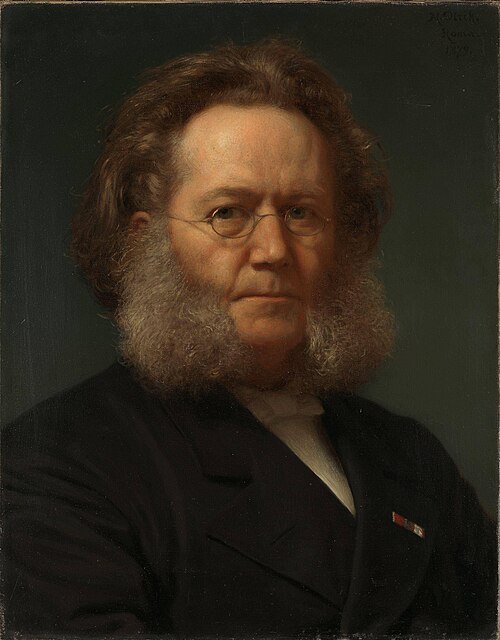
 Who is Henrik Ibsen?
Henrik Johan Ibsen, the towering figure of Norwegian literature, was a playwright whose work transcended national borders to become an enduring influence on modern drama. Born in Skien, Norway, on March 20, 1828, Ibsen’s early life and formative experiences set the stage for his later literary achievements.
His father, Knud Ibsen, was a prosperous merchant who fell into financial ruin when Henrik was young. This event profoundly affected him, shaping both his personal outlook and his artistic vision. Ibsen’s mother, Marichen Altenburg, instilled in him a love for storytelling and the arts.
After leaving school at age 15 due to family financial difficulties, Ibsen began working as an apprentice pharmacist and then moved to Christiania (now Oslo) to pursue his literary ambitions. There he wrote his first plays and established himself within the Norwegian literary scene. In 1862, Ibsen became a theater director in Bergen, where he continued to refine his dramatic style.
His rise to prominence came with works like The Pillars of Society (1877) and A Doll’s House (1879), which challenged societal norms through their exploration of personal freedom and the hypocrisy of social institutions. These plays, among others such as Hedda Gabler (1884) and An Enemy of the People (1882), firmly established Ibsen’s reputation as a literary innovator.
Ibsen married Suzannah Thoresen in 1874, and they had two children: Sigurd Ibsen and Hans Jacob Henriksen. Throughout his career, he maintained close relationships with many influential figures of the time, including playwrights and critics who supported his work.
His legacy is marked by his profound influence on modern drama and literature. Nominated for the Nobel Prize in Literature multiple times, Ibsen’s plays continue to be performed globally over a century after their debut. He passed away on May 23, 1906, in Kristiania (now Oslo), leaving behind a body of work that has shaped the landscape of world theater.
Common Questions
What were some key events early in Henrik Ibsen's life?
In his youth, Henrik Ibsen faced financial hardship when his father lost his fortune. This experience significantly influenced his later works and worldview.
How did Henrik Ibsen become a playwright?
Ibsen began writing plays in his late teens after leaving school due to family financial issues. He moved to Christiania (now Oslo) where he pursued literary ambitions and eventually became a theater director in Bergen.
What are some of Henrik Ibsen's most famous works?
Some of Henrik Ibsen's most renowned plays include A Doll's House (1879), The Pillars of Society (1877), and Hedda Gabler (1884).
Did Henrik Ibsen have any children?
Yes, Henrik Ibsen had two children: Sigurd Ibsen and Hans Jacob Henriksen. He married Suzannah Thoresen in 1874.
How did Henrik Ibsen's work impact the world of theater?
Ibsen's plays challenged societal norms, explored complex psychological themes, and introduced a more realistic approach to dramatic storytelling, influencing generations of playwrights and directors.