 Austria
 Who is Sigmund Freud?
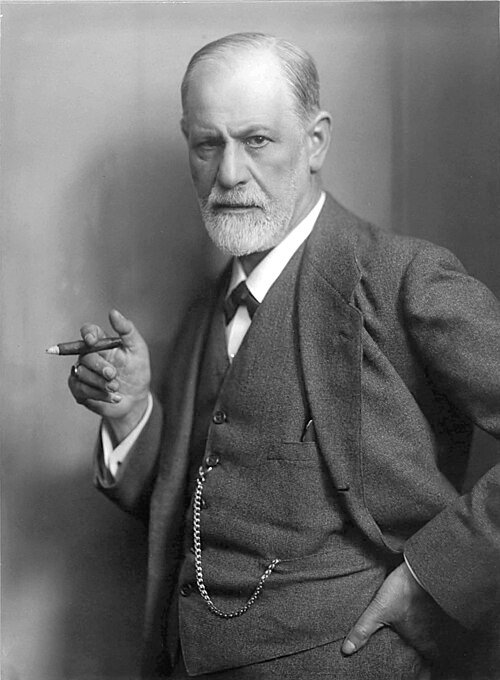
Sigmund Freud, born Sigismund Schlomo Freud on May 6, 1856, in Příbor, Moravia (now the Czech Republic), was an Austrian neurologist who is best known for founding the field of psychoanalysis. Freud’s revolutionary theories about the unconscious mind and the importance of early childhood experiences have left an indelible mark on psychology, psychiatry, literature, and beyond.
Freud came from a large Jewish family in Freiberg (now Příbor), where his father, Jacob Freud, was a wool merchant. The family moved to Leipzig and then to Vienna when Sigmund was just one year old. Growing up in the bustling intellectual environment of late 19th-century Vienna, young Sigismund Schlomo showed an early inclination towards academia and science.
Freud’s journey to prominence began at the University of Vienna, where he earned his medical degree in 1881 after initially studying law. His interests shifted towards neurology, and he eventually specialized in psychiatry under the influence of his mentor Theodor Meynert. In 1902, Freud was appointed a Professor Extraordinarius (senior lecturer) at the University of Vienna for ‘medical psychology’, marking an important milestone in his career.
Freud’s groundbreaking work included the development of psychoanalytic theory and techniques such as dream analysis, free association, and transference. He published numerous influential works, including The Interpretation of Dreams (1900), which is considered one of the most important texts in the history of psychology.
Freud’s personal life was marked by his marriage to Martha Bernays on September 7, 1882. The couple had six children together: Mathilde, Jean Martin, Oliver, Ernst L., Sophie, and Anna, who became a noted psychoanalyst in her own right. Freud lived through tumultuous times, including the rise of Nazi Germany, which forced him to flee Vienna for England in 1938.
Sigmund Freud passed away on September 23, 1939, in London due to complications from laryngeal cancer. Despite criticisms over his theories and methods, Freud’s legacy remains unparalleled. His contributions continue to shape contemporary psychology and psychotherapy, as well as fields such as literature, philosophy, anthropology, and cultural studies.
Common Questions
Where was Sigmund Freud born?
Sigmund Freud was born in Příbor (then called Freiberg), Moravia, which is now part of the Czech Republic.
What are some of Sigmund Freud's most famous works?
Some of Freud's most famous works include The Interpretation of Dreams (1900) and The Psychopathology of Everyday Life (1901).
Why did Sigmund Freud leave Vienna?
Freud left Vienna in 1938 when Nazi Germany annexed Austria, a move that endangered his life due to his Jewish heritage.
What impact did Sigmund Freud have on psychology?
Sigmund Freud founded psychoanalysis and introduced concepts such as the unconscious mind, defense mechanisms, and the Oedipus complex, which profoundly influenced the field of psychology.
How many children did Sigmund Freud have?
Sigmund Freud had six children with his wife Martha Bernays: Mathilde, Jean Martin, Oliver, Ernst L., Sophie, and Anna.