 United Kingdom
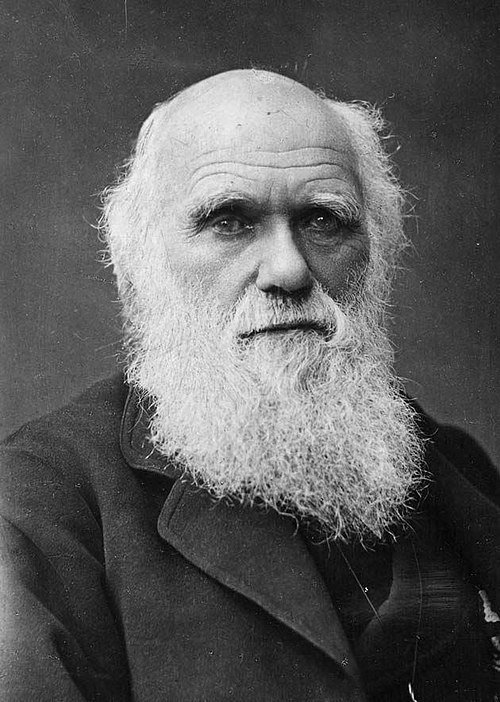
 Who is Charles Darwin?
Charles Robert Darwin, the quintessential naturalist and evolutionary theorist, was born on February 12, 1809, in Shrewsbury, England. His groundbreaking work On the Origin of Species, published in 1859, challenged religious and scientific norms by proposing that all species evolve through a process of natural selection.
Darwin was born into a family with deep intellectual roots. His father Robert Darwin was a physician and financier, while his mother Susannah Wedgwood came from the influential Wedgwood pottery dynasty. Despite an unremarkable early education at Shrewsbury School, Charles developed a keen interest in natural history and botany during his teenage years.
His journey to prominence began when he embarked on the HMS Beagle as its naturalist in 1831, tasked with surveying South America. During this five-year voyage, Darwin collected specimens and made detailed observations that would later form the basis of his revolutionary ideas about evolution. Upon returning to England, Darwin faced a daunting task: synthesizing his extensive fieldwork into a coherent theory.
He spent over two decades refining his ideas before publishing On the Origin of Species. The book’s impact was immediate and profound; it transformed scientific thought and continues to shape our understanding of biology today. Beyond this seminal work, Darwin also authored several other influential texts on subjects ranging from the expression of emotions in animals to the descent of man.
Darwin’s personal life was marked by a deep marriage to Emma Wedgwood, his first cousin, with whom he had ten children. Although their relationship faced occasional strain due to differing religious beliefs, they maintained a strong bond throughout their lives. Darwin’s health issues began in the mid-1830s and worsened over time, which may have influenced his later works.
Charles Darwin died on April 19, 1882, at the age of 73, leaving behind a legacy that has profoundly shaped modern biology. His theory of evolution by natural selection remains one of the most influential and controversial ideas in scientific history, reshaping our understanding of life’s diversity.
Common Questions
What was Charles Darwin's early education like?
Darwin attended Shrewsbury School where he showed little interest in academic pursuits but developed a fascination with natural history and botany.
When did the HMS Beagle voyage take place?
Charles Darwin joined the HMS Beagle as its naturalist on December 27, 1831, setting sail for South America to survey coastal areas. The voyage lasted until October 2, 1836.
What were some of Charles Darwin's other major works besides On the Origin of Species?
Darwin wrote extensively on various topics including The Descent of Man and Selection in Relation to Sex, published in 1871, and The Expression of the Emotions in Man and Animals, released in 1872.
How many children did Charles Darwin have?
Charles Darwin and his wife Emma Wedgwood had ten children together. However, only seven survived to adulthood: Annie Elizabeth, William Erasmus, Henrietta Litchfield (Etty), George Howard, Francis Jenyns, Leonard Hill, and Horace Welwood.
How did Charles Darwin's health issues affect his work?
Darwin suffered from a variety of chronic illnesses throughout his life, starting in the mid-1830s. These health problems likely contributed to his slowed pace of writing and publishing during his later years.