 United States
 Who is Dwight D. Eisenhower?
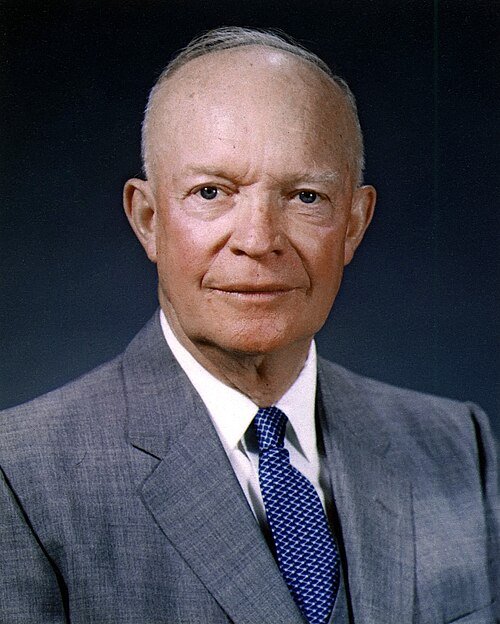
David Dwight Eisenhower, better known as Dwight David Eisenhower, was one of the most influential figures of the twentieth century, holding the office of President of the United States from 1953 to 1961. Born on October 14, 1890, in Denison, Texas, he grew up in Abilene, Kansas, where his family had settled after moving from Texas.
His father, David Jacob Eisenhower, was a struggling farmer and mechanic while his mother, Ida Stover Eisenhower, played a crucial role in shaping young Dwight’s character. Despite the family’s modest means, Eisenhower excelled academically and athletically at Abilene High School before being accepted into West Point Military Academy.
After graduating from West Point in 1915, Eisenhower embarked on an illustrious military career that included stints as a battalion commander during World War II and ultimately leading the Allied forces to victory in Europe. His strategic vision and leadership capabilities were instrumental in planning and executing operations such as D-Day.
Following his military service, Eisenhower transitioned into politics, becoming the 34th President of the United States on January 20, 1953. During his tenure, he implemented significant policies ranging from domestic affairs like civil rights advancements to foreign policy initiatives including the promotion of nuclear disarmament.
Eisenhower married Mamie Geneva Doud in 1916; they had two sons together: Doud Dwight Eisenhower and John Sheldon David Eisenhower. The Eisenhower family was well-respected within military circles, with Milton Stover Eisenhower, Dwight’s brother, serving as a prominent diplomat during the Cold War.
His legacy is marked not only by his leadership during wartime but also by his efforts to promote peace through diplomacy and international cooperation. After stepping down from office on January 20, 1961, he returned to his home in Gettysburg, Pennsylvania, where he wrote several books reflecting on his career and the challenges facing America.
Eisenhower passed away due to a heart attack on March 28, 1969. He left behind a profound impact on American politics and military strategy that remains influential today.
Common Questions
When was Eisenhower born?
Dwight D. Eisenhower was born on October 14, 1890.
What were some of Eisenhower's achievements during World War II?
During WWII, Eisenhower played a pivotal role in the European theatre, planning and executing key operations such as D-Day and overseeing Allied military strategy.
Who was Mamie Eisenhower?
Mamie Eisenhower (1896-1979) was Dwight's wife; they married in 1916 and had two sons together. She supported her husband throughout his political career.
What were some of Eisenhower's policies as President?
Eisenhower focused on domestic issues like civil rights, economic stability, and education, while also pursuing nuclear disarmament and promoting peace through the Eisenhower Doctrine.
How did Eisenhower contribute to military strategy?
As a five-star general, Eisenhower developed innovative strategies during WWII that shaped modern warfare, including joint operations between Allied forces.
What was Eisenhower's legacy in international affairs?
Eisenhower promoted peace through diplomacy and the establishment of institutions like the European Recovery Program (Marshall Plan) to prevent future conflicts.