 Russia
 Who is Joseph Stalin?
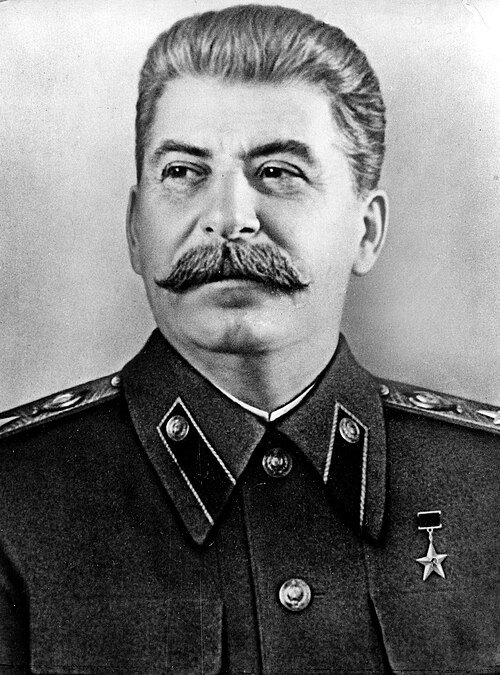
Joseph Vissarionovich Stalin, born Ioseb Jughashvili on December 18, 1878, in Gori, Georgia, was the architect of some of the most transformative—and devastating—years of Soviet history. Rising from a humble background to become one of the most powerful figures of the twentieth century, his life was marked by both immense political success and personal tragedy.
Stalin’s early years were shaped by a tumultuous family environment and an education that exposed him to radical political ideologies at the Tiflis Theological Seminary. His departure from this path in favor of revolutionary activities led him into the Russian Social Democratic Labour Party, where he adopted the alias ‘Koba’ before officially joining the Bolsheviks under Vladimir Lenin.
His rise to power was gradual and strategic. After serving as a party secretary during the Russian Revolution of 1917, Stalin consolidated his control over the Communist Party in the years following Lenin’s death in 1924. By 1928, he had established himself as General Secretary, a position from which he orchestrated purges and collectivizations that would transform Soviet society.
Stalin’s personal life was marked by tragedy and political alliance. He married twice: first to Ekaterina Svanidze in 1906 (who died of tuberculosis in 1907), and then to Nadezhda Alliluyeva, who committed suicide in 1932. His children—Yakov Dzhugashvili, Vasily Dzhugashvili, and Svetlana Alliluyeva—suffered from their father’s policies or survived him.
Stalin passed away on March 5, 1953, after suffering a stroke that led to an intracranial hemorrhage. His death marked the end of one of history’s most controversial reigns, leaving behind a legacy of political terror and industrialization that continues to influence global politics.
Common Questions
What was Stalin's early life like?
Born in Gori, Georgia, Joseph Stalin came from a modest background. His father was an alcoholic cobbler who died when Stalin was young, and his mother struggled financially.
How did Stalin rise to power?
Stalin joined the Bolsheviks and rose through the ranks by consolidating control over party organizations. He became General Secretary in 1922 and used this position to strengthen his grip on Soviet leadership following Lenin's death in 1924.
What were some of Stalin's key achievements?
Stalin oversaw rapid industrialization through the Five-Year Plans starting from 1928, collectivized agriculture, and won World War II against Nazi Germany (known as the Great Patriotic War in Russia).
How did Stalin's personal life influence his leadership style?
Stalin's tumultuous family background may have contributed to his iron-fisted approach. His marriage to Nadezhda Alliluyeva ended tragically with her suicide, which had no reported impact on his policies.
What was the impact of Stalin’s reign?
Stalin's rule saw significant industrial growth and victory in WWII but also mass purges and famines like the Holodomor, leading to millions of deaths. His legacy remains deeply controversial.