 United States
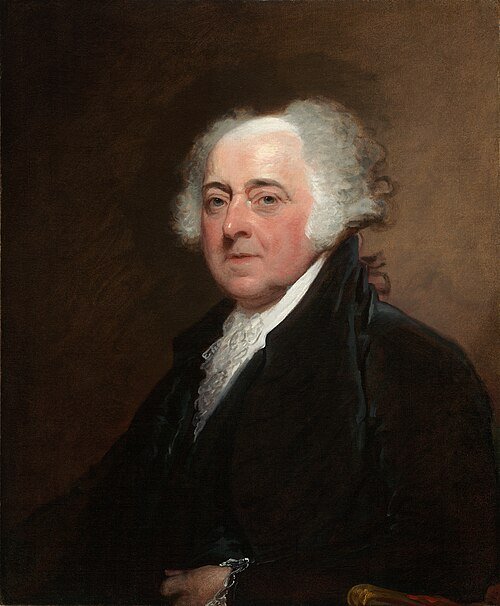
 Who is John Adams?
John Adams (October 30, 1735 – July 4, 1826), one of America’s Founding Fathers, was instrumental not only in shaping the early United States but also in laying the foundational principles upon which its government stands. Born into a modest New England family, Adams’ rise from his origins to becoming the second President of the United States is a testament to his relentless pursuit of justice and liberty.
Adams was born in Braintree (now Quincy), Massachusetts, to John Adams Sr., a farmer and local figure, and Susanna Boylston. His education began at Harvard College where he earned both a Bachelor’s degree and Master’s degree. The early formative years spent with his parents instilled in him a strong sense of duty towards public service, which later defined his career.
Following graduation, Adams practiced law in Boston and quickly became involved in the American revolutionary movement against British rule. He was elected as one of the delegates to the First and Second Continental Congresses where he drafted the Massachusetts Constitution with James Bowdoin, a document that influenced the United States Constitution later on. In 1776, Adams was part of the committee tasked with drafting the Declaration of Independence.
Adams’ diplomatic career began when he served as one of several American representatives in Europe during and after the Revolutionary War. He secured important loans from France, which were critical for the success of the American Revolution. His appointment as Minister to the Court of St. James’s (United Kingdom) in 1785 marked a significant step towards international recognition of the newly formed United States.
His political career culminated with his election as Vice President under George Washington and then as the second President from 1797 until 1801, during which time he sought to maintain peace between France and Britain while addressing domestic issues such as the Alien and Sedition Acts. Although not re-elected, Adams left a lasting legacy through his principled stand against political partisanship.
Adams’ personal life was deeply intertwined with that of Abigail Smith, whom he married in 1764. Their marriage produced four children: Abigail (Nabby), John Quincy, Susanna, Charles, and Thomas Boylston Adams. A prolific letter writer, Adams corresponded extensively with his wife, whose insights into the political landscape were invaluable to him.
The passing of John Adams on July 4, 1826, coincided with the fiftieth anniversary of the signing of the Declaration of Independence—a fact that added poignancy to his legacy. His contributions to American democracy and international diplomacy continue to be celebrated for their wisdom and foresight.
Common Questions
What were John Adams' early educational experiences?
John Adams attended Harvard College where he received a Bachelor’s degree in 1755 and later earned his Master's degree in 1758.
How did John Adams contribute to the American Revolution?
Adams was a key figure during the American Revolution, serving on the committee that drafted the Declaration of Independence and securing loans from France critical for the war effort.
What were some significant diplomatic roles held by John Adams?
John Adams served as one of several American representatives in Europe during and after the Revolutionary War. He was also appointed as Minister to the Court of St. James's (United Kingdom) in 1785.
Who were John Adams' children?
John Adams had four surviving children with his wife Abigail: Abigail (Nabby), John Quincy, Susanna, and Charles.
What is the significance of John Adams’ death date?
John Adams died on July 4, 1826, exactly fifty years after the signing of the Declaration of Independence, a poignant coincidence reflecting his enduring legacy in American history.