 United States
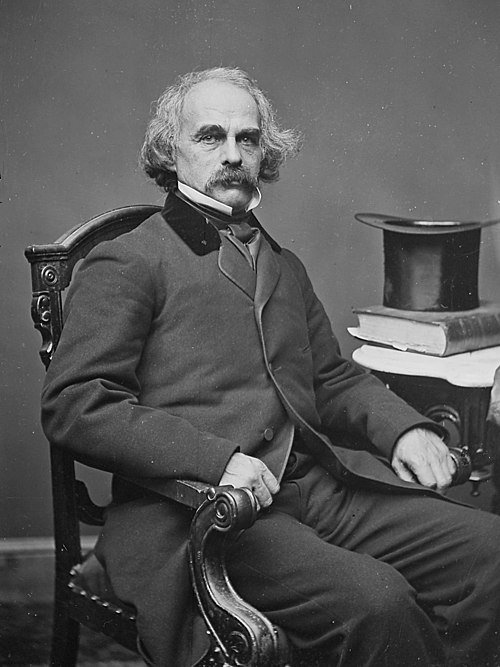
 Who is Nathaniel Hawthorne?
Nathaniel Hawthorne (July 4, 1804 – May 19, 1864) was a prominent American novelist and short story writer whose work has left an indelible mark on American literature. Born in Salem, Massachusetts, Hawthorne’s early life was marked by the complexities of his family history and personal ambitions.
Hawthorne’s father, also named Nathaniel Hathorne, died when he was just four years old, leaving his mother Elizabeth Clarke Hathorne to raise him alongside two sisters. The young Hawthorne spent much of his childhood in seclusion, influenced heavily by the Puritan heritage that permeated Salem’s culture and history. His formative experiences were shaped not only by family but also by a burgeoning interest in literature and writing.
After graduating from Bowdoin College in 1825, Hawthorne began to establish himself as a writer, although his early years were marked by relative obscurity. He published several short stories during this period, including the acclaimed collection Mosses from an Old Manse. His breakthrough came with the publication of The Scarlet Letter in 1850, which is widely considered one of the greatest American novels ever written.
Hawthorne’s career continued to flourish through his involvement with other notable writers such as Herman Melville and Henry Wadsworth Longfellow. He also served briefly as a United States Consul during the mid-1850s in Liverpool, England. However, it was his body of work that solidified his legacy.
His personal life included marriage to Sophia Peabody in 1842 and fatherhood with three children: Una, Julian, and Rose. His relationship with Sophia was a significant source of support and inspiration throughout his career. He also maintained close friendships with other literary figures that influenced both his work and personal growth.
Nathaniel Hawthorne passed away on May 19, 1864, while on a trip to the Berkshires with his wife and daughter. His death marked the end of an era in American literature but left behind a rich legacy of literary exploration into themes of morality, identity, and human nature that continue to resonate today.
Common Questions
What is Nathaniel Hawthorne's most famous work?
The Scarlet Letter, published in 1850, remains his best-known novel. It explores themes of adultery, guilt, and societal hypocrisy through the eyes of Hester Prynne.
When did Nathaniel Hawthorne attend Bowdoin College?
Hawthorne attended Bowdoin College from 1821 to 1825, where he befriended notable contemporaries like Henry Wadsworth Longfellow and Franklin Pierce.
Did Nathaniel Hawthorne have any children?
Yes, Hawthorne had three children with his wife Sophia: Una, Julian, and Rose. Their family life was a backdrop to much of his later writing.
What position did Nathaniel Hawthorne hold in England?
From 1853 to 1857, Hawthorne served as the United States Consul in Liverpool, England, under President Franklin Pierce's administration.
How long was Nathaniel Hawthorne married to Sophia?
Hawthorne and Sophia were married on July 9, 1842. Their marriage lasted for over two decades until his death in 1864.