 United Kingdom
 Who is Henry Viii Of England?
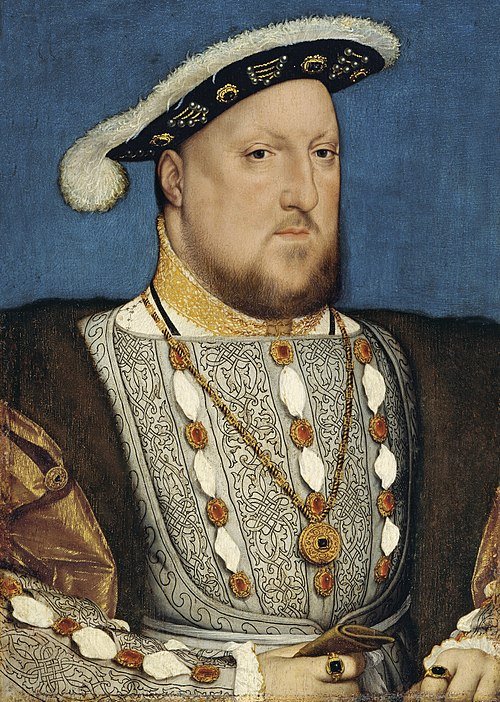
Henry VIII of England (born June 28, 1491; died January 28, 1547) was a monarch who left an indelible mark on British history. His reign saw dramatic changes in religious practice and political structure, setting the stage for centuries of English governance.
Born as Henry Tudor to King Henry VII and Elizabeth of York, he was the second son with no immediate prospects for the throne. However, his elder brother Arthur’s death in 1502 changed everything. As the new heir apparent, Henry received an extensive education covering theology, literature, and military science, which would shape his future as a man of culture and power.
Ascending to the throne at age eighteen upon his father’s death in 1509, Henry VIII quickly established himself through strategic marriages that consolidated English influence. His break with Rome following Pope Clement VII’s refusal to annul his marriage to Catherine of Aragon led him to establish the Church of England and marry Anne Boleyn in 1533, marking a significant shift in religious history.
Henry VIII’s personal life was marked by six marriages and numerous affairs. He fathered several children but only three survived into adulthood: Mary I, Elizabeth I, and Edward VI. His marriages to Catherine of Aragon (married 1509), Anne Boleyn (married 1533), Jane Seymour (married 1536), Anne of Cleves (married 1540), Catherine Howard (married 1540), and Catherine Parr (married 1543) were a mix of political alliances and romantic entanglements. He also had illegitimate children, including Henry FitzRoy.
The king’s legacy is multifaceted: his religious reforms reshaped the relationship between church and state in England; he expanded royal power over parliament; and he patronized the arts, including music and architecture. His reign was marked by military campaigns and diplomatic maneuvering that enhanced English prestige on the European stage.
Henry VIII died at the age of 55 after a series of ailments and obesity-related complications. His passing left behind a kingdom in flux, with his son Edward VI continuing his father’s religious reforms but facing challenges in governance due to the young king’s age.
Common Questions
What was Henry VIII's role as King?
Henry VIII served as King of England from 1509 until his death in 1547. He is known for establishing the Church of England and reforming English governance.
How many wives did Henry VIII have?
King Henry VIII had six wives: Catherine of Aragon, Anne Boleyn, Jane Seymour, Anne of Cleves, Catherine Howard, and Catherine Parr.
What were the major religious changes during Henry VIII's reign?
Henry broke with Rome in 1534 to form the Church of England after Pope Clement VII refused his annulment from Catherine of Aragon. This marked a significant shift towards Protestantism in England.
Who succeeded Henry VIII as King of England?
Edward VI, son of Jane Seymour and Henry's only legitimate male heir, succeeded him at the age of nine upon Henry's death in 1547.
What is Henry VIII's lasting impact on English history?
Henry VIII's most enduring legacy includes the establishment of the Church of England, expansion of royal power over parliament, and significant changes to English governance and religious practices.