 United Kingdom
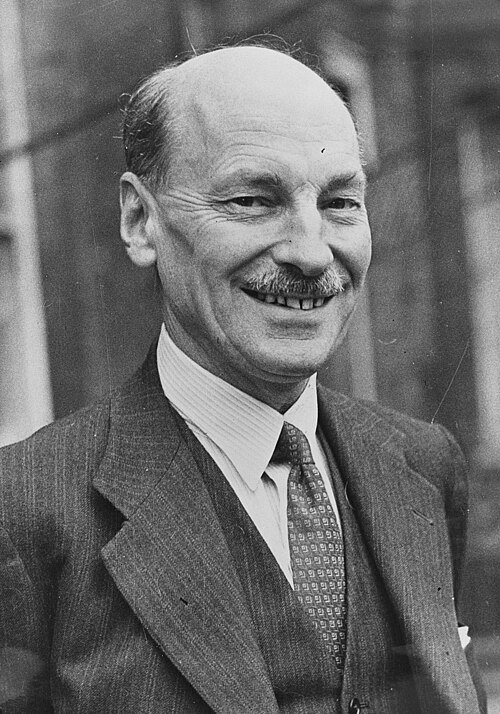
 Who is Clement Attlee?
Clement Richard Attlee, the architect of Britain’s post-war welfare state, was a man whose quiet demeanor belied his monumental impact on twentieth-century politics. Born on January 3, 1883, in Putney, London, Attlee came from a middle-class background, with roots in the Quaker community.
His father, Henry Attlee, and mother, Ellen Bravery Watson, instilled in him values of public service and social justice. Educated at Haileybury College and later at University College, Oxford, Attlee was marked by his early experiences in East London slums as a student and lawyer.
Attlee’s political career took off when he joined the Labour Party in 1908. He served as mayor of Stepney from 1919 to 1920 before entering Parliament in 1922, where his pragmatic approach and commitment to social reform gradually earned him prominence within the party.
Attlee’s rise to leadership was marked by significant milestones: he became deputy leader under George Lansbury in 1935, and after the Labour Party lost power again in 1935, Attlee took over as party leader. He led Britain through a period of profound change following World War II, overseeing the creation of the National Health Service and other sweeping social reforms.
Attlee’s personal life was equally rich with deep commitments to his family and political cause. He married Violet Millard in 1922, and they had three children together: Janet Attlee, Lady Felicity Attlee, and Lady Alison Davis. His siblings included Thomas Simons Attlee and Bernard Henry Bravery Attlee.
Attlee’s legacy is defined by his role in shaping Britain after the war, with policies that continue to influence British society. He stepped down as prime minister in 1951 and continued to serve in Parliament until his retirement in 1964. Clement Attlee passed away on October 8, 1967, in Westminster Hospital.
Common Questions
What were some of the major social reforms introduced by Clement Attlee?
Attlee's government implemented several key social reforms after World War II, including the establishment of the National Health Service (NHS) in 1948 and extensive house-building programs to address housing shortages.
How did Clement Attlee become Prime Minister of the United Kingdom?
Clement Attlee became leader of the Labour Party in 1935, succeeding George Lansbury. Following World War II, his party won a landslide victory over Winston Churchill's Conservative government in the 1945 general election.
What was Clement Attlee's role during World War II?
Attlee served as Deputy Prime Minister under Winston Churchill from 1940 to 1945, playing a crucial role in managing home front issues and coordinating Britain’s war effort.
Did Clement Attlee receive any notable awards or nominations?
Clement Attlee was nominated for the Nobel Peace Prize several times during his career. He received these recognitions for his work towards peace and social justice, particularly after World War II.