 United Kingdom
 Who is George V?
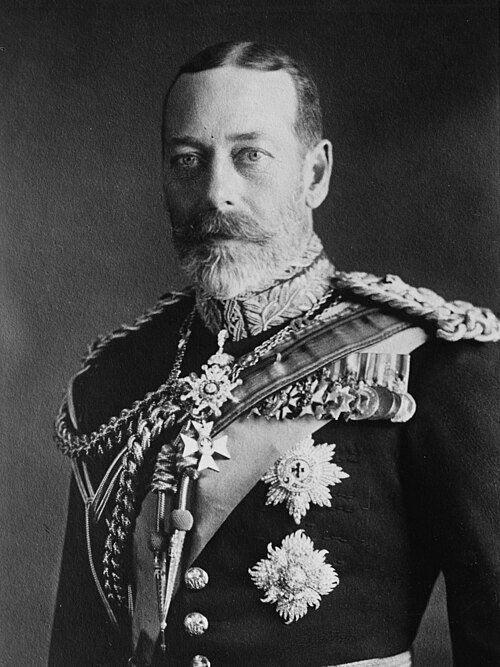
King George V reigned as the King of the United Kingdom and the British Dominions, and Emperor of India, from May 6, 1910, until his death on January 20, 1936. Born as Prince George Frederick Ernest Albert to Edward VII and Alexandra of Denmark in London’s Marlborough House on June 3, 1865, he was the eldest son of a future king and heir apparent from birth.
George’s early life was marked by his education at Osborne Naval College and Dartmouth Naval College. He completed his naval training and embarked on several voyages around the world before returning to Britain in 1892 when Queen Victoria died, elevating his father Edward VII to the throne. At twenty-seven years old, George married Mary of Teck on July 6, 1893, who was initially intended as a bride for his elder brother Albert Victor but became his lifelong partner.
Ascending to the throne in 1910 upon the death of Edward VII, George V faced numerous challenges during his reign. The outbreak of World War I in 1914 strained relations with Germany due to his German heritage and relatives; as a result, he changed the royal house’s name from Saxe-Coburg-Gotha to Windsor in 1917. He was also instrumental in the creation of the Royal Air Force (RAF) in April 1918.
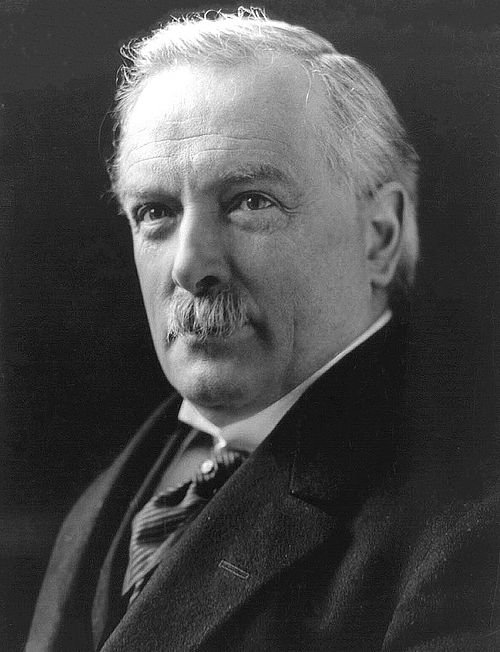
As king, George V made significant strides in constitutional matters by working closely with Prime Ministers such as David Lloyd George and Stanley Baldwin. His role during World War I included maintaining morale at home through public appearances and broadcasts, although he also faced criticism for his anti-German stance.
His personal life was characterized by a stable marriage to Mary of Teck, who gave birth to six children, including future kings Edward VIII and George VI. Despite his formal demeanor, George V was known for his sense of duty and loyalty to the institution he served. His reign ended on January 20, 1936, when he died at Sandringham House from chronic bronchitis complicated by pleurisy and arteriosclerosis.
George V’s legacy is one of constitutional evolution and stability in a time of great upheaval for the British Empire. His leadership during World War I and his efforts to maintain public support are often highlighted as key achievements, although his conservative approach sometimes clashed with political developments of the era.
Common Questions
Where was George V born?
George V was born in Marlborough House, London on June 3, 1865.
When did George V become king?
George V became King of the United Kingdom and Ireland upon the death of his father Edward VII on May 6, 1910.
What major changes did George V implement during his reign?
One significant change was changing the name of the British royal house from Saxe-Coburg-Gotha to Windsor in 1917 due to anti-German sentiment during World War I.
How many children did King George V have?
King George V had six children: Edward VIII, George VI, Mary, Henry, John, and George.
What was the cause of George V's death?
George V died on January 20, 1936, from chronic bronchitis complicated by pleurisy and arteriosclerosis at Sandringham House in Norfolk.