-
01
Diagnosed with manic depression, now known as bipolar disorder.
-
02
During the last part of his life, he lived openly with his mistress Yvonne Cloetta.
-
03
He allegedly declined an O.B.E. in 1956 but accepted the Companion of Honour in 1966 and the Order of Merit in 1984.
-
04
Both he and his wife were famous Roman Catholic converts.
-
05
His brother Sir Hugh Greene was a correspondent for the Daily Telegraph in Germany in the 1930s and later became Director General of the BBC from 1960 to 1969.
-
06
Nominated for Broadway’s 1957 Tony Award as author of Best Play nominee The Potting Shed.
-
07
His career as a film critic ended after a controversial review of a Shirley Temple film led to a lawsuit.
-
08
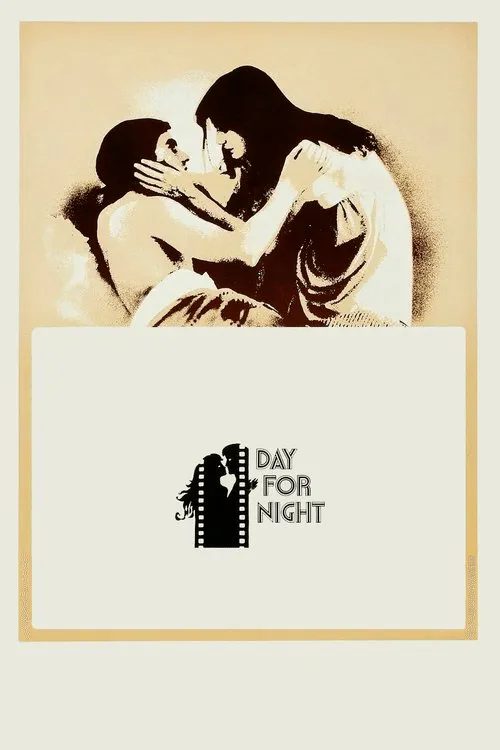
Biography and bibliography appear in Contemporary Authors, New Revision Series, Vol. 131, pages 202-211.
-
09
Made a Fellow of the British Film Institute for outstanding contribution to film culture.
-
10
Father of Lucy Greene b. 1933 and Francis Hugh Greene b. 1936.
-
11
Son of Henry Graham Greene and Marion Raymond Greene.
-
12
Great-uncle of filmmaker Nicholas Greene, producer of Travels with My Aunt 2011.
-
13
Many of his novels were adapted by others; he was often scathing about the results but adapted Brighton Rock, The Fallen Idol, and Our Man in Havana himself. His only original screenplay was The Third Man.
-
14
As a child at boarding school, he was tormented by other pupils because his father was the headmaster.
-
15
Once confessed to encounters with over 30 prostitutes in London.
-
16
Though he converted to Catholicism, Greene was against any kind of authority, including religious authority, and the Catholic Church despaired of his rebellious stance.
-
17
He was a film critic for many years and said he wrote Orient Express and Confidential Agent because he needed the money.
-
18
Brother of Alice Marion b. 1896, William Herbert b. 1898, Charles Raymond b. 1901, and Hugh Carleton 1910-1987.
-
19
In his early writing career, he often struggled financially and was short of money.
-
20
Enjoyed traveling to various countries, usually in search of adventure.
-
21
A staunch advocate for human rights.
-
22
His first work to reach the screen was Stamboul Train, retitled Orient Express 1933, which required four writers including Oscar Levant.
-
23
Appeared briefly in Day for Night as an insurance salesman.
-
24
His grandmother Jane Wilson was a first cousin of Scottish novelist Robert Louis Stevenson.
-
25
Through his father, he was a cousin-in-law of Thomas Fry 1846-1930, a schoolmaster who served as Dean of Lincoln from 1910 to 1930.
-
26
In a 1971 interview, he claimed Pope Pius XII received a copy of The End of the Affair and commented, this man has problems.
-
27
Brief career as an Intelligence Officer for MI5 during World War II; resigned in 1944 for mysterious reasons.
-
28
Critics called him the greatest living writer in the English language.
-
29
From 1935 to 1940, film critic for The Spectator until his review of Shirley Temple’s Wee Willie Winkie contributed to the magazine’s demise.
-
30
As a student at Oxford, he wrote 60 poems and various short stories.
-
31
In the 1930s, he was the film critic for the Spectator.
-
32
Uncle of Louise Dennys.
-
33
Lived in Antibes.
-
34
Contributed to screenplays for 21 Days, The Green Cockatoo, Went the Day Well, and Saint Joan.
-
35
His parents Charles Henry Greene and Marion Raymond Greene were first cousins, both from a large influential family including owners of Greene King Brewery, bankers, and politicians.
-
36
Cousin of Ben Greene 1901-1978, a Labour Party politician interned during WWII for his role in the far-right British People’s Party and affiliation with Nazi diplomat Ernst Wilhelm Bohle.