-
01
Verne’s publisher deemed the 1863 manuscript Paris in the 20th Century too pessimistic, fearing it would harm Verne’s career. Verne locked it in a safe. His great-grandson discovered it in 1989.
-
02
On March 9, 1886, Verne’s nephew Gaston attacked him with a gun. During the struggle, a bullet struck Verne’s left shin, causing a wound that never fully healed. Gaston spent the remainder of his life in an asylum.
-
03
The Mysterious Island serves as a sequel connecting the events of In Search of the Castaways and 20,000 Leagues Under the Sea.
-
04
When Verne abandoned his law career, his father, also a lawyer, cut off financial support, forcing Verne to work as a stockbroker.
-
05
The Science Fiction and Fantasy Hall of Fame inducted Verne in 1999.
-
06
Verne publicly criticized H.G. Wells for using cavourite, a fictional anti-gravity substance, in The First Men in the Moon 1901, insisting that science fiction should adhere to contemporary scientific plausibility.
-
07
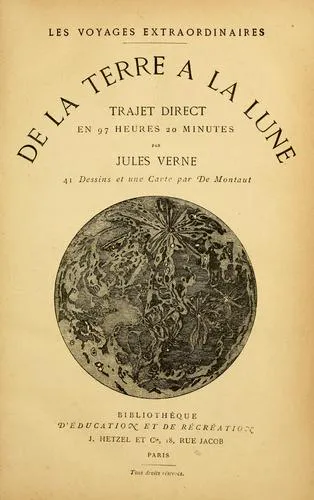
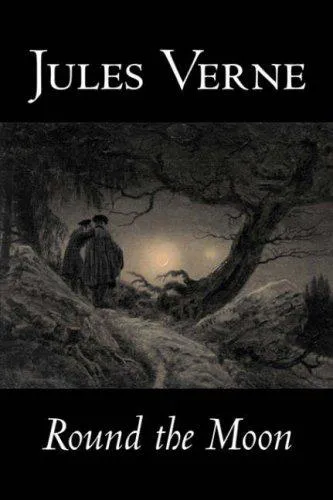
Verne’s 1865 novel From the Earth to the Moon predicted that the United States would be the first nation to reach the moon. This happened in 1969.
-
08
Verne’s son Michel Jean Pierre, born August 4, 1861, was a rebellious enfant terrible who married an actress against Verne’s wishes and fathered two children with his underage mistress. After Verne’s death, Michel matured and oversaw the posthumous publication of Invasion of the Sea and The Lighthouse at the End of the World in 1905.
-
09
Back to the Future Part III 1990 highlights Verne’s legacy when time-traveling scientist Doc Brown names his sons Jules and Verne after the author. The film features a discussion of Verne’s novels and ends with the boys meeting Marty McFly.
-
10
A stage adaptation of 20,000 Leagues Under the Sea premiered in 2018 at Chicago’s Lookingglass Theatre Company and earned a Joseph Jefferson Equity Award nomination for New Adaptation.