 Russia
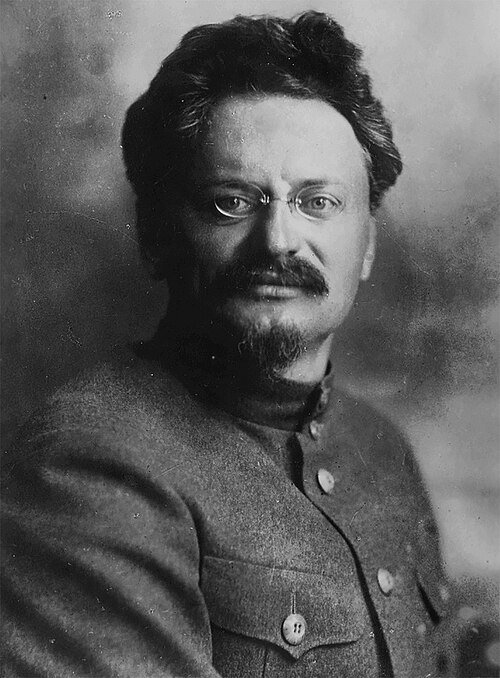
 Who is Leon Trotsky?
Leon Trotsky, born Lev Davidovich Bronstein on October 26, 1879, in Yanovka, Ukraine, was a towering intellect and revolutionary whose life and work continue to shape our understanding of politics and history. Despite being exiled multiple times throughout his life, he became a central figure in the Russian Revolution alongside Vladimir Lenin.
Trotsky’s early years were marked by political awakening; as a child, he witnessed significant social inequalities which spurred his revolutionary ideology. His family was part of the Jewish intelligentsia, and both his parents supported him in pursuing higher education despite financial constraints.
By 1896, Trotsky had joined the Russian Social Democratic Labour Party (RSDLP). He quickly rose through the ranks due to his sharp intellect and organizational skills. After a brief imprisonment for his revolutionary activities, he was exiled to Siberia but managed to escape in 1902, adopting the pseudonym Leon Trotsky. In Switzerland, he met fellow Bolsheviks like Lenin and began formulating theories on permanent revolution.
Trotsky’s career reached its zenith during the Russian Revolution of 1917. He became the founder and commander of the Red Army, overseeing military strategy that was crucial in defeating counter-revolutionary forces. However, his political rivalry with Joseph Stalin led to Trotsky being sidelined from power after Lenin’s death.
In exile following internal purges by the Soviet regime, Trotsky remained an influential voice against Stalinism through his writings and speeches. He married twice: first to Aleksandra Sokolovskaya in 1903, who bore him two children; then to Natalia Sedova in 1923, with whom he had three children. His second marriage was especially significant as they faced numerous hardships together during Trotsky’s exile.
Trotsky’s assassination on August 21, 1940, marked the end of his tumultuous life and career but not his influence. He left behind a legacy that includes foundational texts such as “The History of the Russian Revolution,” which remains an essential work for students of history and politics.
Common Questions
What were some key events in Trotsky's early political career?
In 1896, Trotsky joined the Russian Social Democratic Labour Party. He was arrested and exiled to Siberia but escaped in 1902.
How did Trotsky contribute during the Russian Revolution?
Trotsky became a founding member of the Red Army and played a critical role in military strategy that helped defeat counter-revolutionary forces during the Russian Civil War.
What were some of Trotsky's notable publications?
Trotsky is known for his historical works such as “The History of the Russian Revolution” (1930).
Why was Trotsky exiled from Russia?
After Lenin’s death in 1924, Trotsky fell out with Stalin over policy disagreements and ideological differences. He was eventually expelled from the Soviet Union in 1928.
Who were some of Trotsky's family members?
Trotsky had two children by his first wife Aleksandra Sokolovskaya and three children with his second wife Natalia Sedova.