 Germany
 Who is Otto Von Bismarck?
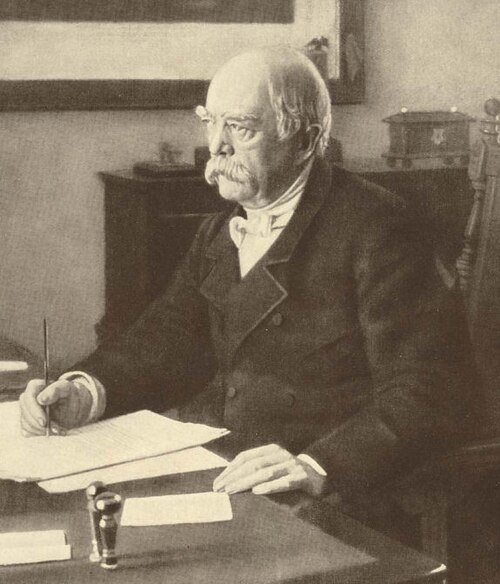
On April 1, 1815, Otto Eduard Leopold von Bismarck, later known as the Iron Chancellor of Germany, entered the world. His life story is one of political acumen, strategic brilliance, and profound impact on European history.
Born into a Prussian aristocratic family in Schönhausen, Brandenburg, young Otto was influenced by his father Ferdinand von Bismarck, an estate owner, and his mother Wilhelmine Luise Mencken. Though his early years were marked by familial ties to the landed gentry, Bismarck’s education at the University of Göttingen and later at Frederick William University Berlin laid the groundwork for his political career.
From a military officer to an ambassador, von Bismarck’s rise was meteoric. He entered politics in 1847 as a member of the Prussian House of Representatives and quickly became a voice for conservative Prussian interests. His most significant achievement came on January 18, 1871, when he oversaw the proclamation of William I as German Emperor, marking the unification of Germany under Prussian leadership.
Personal life was integral to von Bismarck’s public persona. He married Johanna von Puttkamer in 1847 and had three children: Marie, Wilhelm, and Herbert. His marriage was a source of both support and contention as his political career progressed.
The legacy of Otto von Bismarck is one of strategic statecraft and the establishment of a united Germany. He passed away on July 30, 1898, in Friedrichsruh, aged 83, from respiratory arrest. His diplomatic skill and pragmatic approach to politics cemented his place as one of history’s most influential statesmen.
Common Questions
Where was Otto von Bismarck born?
Otto von Bismarck was born in Schönhausen, Brandenburg, Germany.
What were the key dates in Otto von Bismarck's political career?
Key dates include 1847 when he entered politics as a member of the Prussian House of Representatives and January 18, 1871, when he proclaimed William I as German Emperor.
Who were Otto von Bismarck's parents?
His father was Ferdinand von Bismarck and his mother was Wilhelmine Luise Mencken.
How did Otto von Bismarck unify Germany?
Von Bismarck orchestrated a series of wars with Austria (1866) and France (1870-71), which led to the unification of German states under Prussian leadership and the proclamation of William I as Emperor.
Did Otto von Bismarck have any siblings?
Yes, he had a sister named Malwine von Bismarck and a brother named Bernhard von Bismarck.