 India
India Who is Rabindranath Tagore?
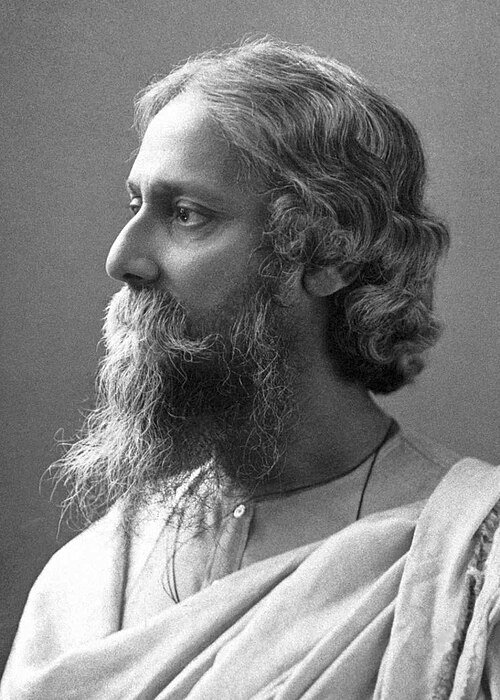
Rabindranath Tagore (May 7, 1861 – August 7, 1941) was an unparalleled literary figure whose profound influence on literature, music, philosophy, and art transcended his native Bengal to resonate globally. Born into the illustrious Brahmo Samaj family of Calcutta, Rabindranath’s early life was shaped by a blend of traditional Bengali culture and progressive thought.
Tagore’s formative years were marked by intense intellectual engagement and creative exploration. His father, Debendranath Tagore, encouraged his children to pursue their passions without societal constraints. This environment fostered Rabindranath’s diverse talents in poetry, music, painting, and drama from a young age.
As he matured, Tagore’s career flourished with the publication of numerous books, including ‘Gitanjali’ (Song Offerings) which earned him international acclaim. He founded Visva-Bharati University in 1921 to promote a synthesis of Eastern and Western thought, becoming its first chancellor. Rabindranath was awarded the Nobel Prize in Literature in 1913 for his collection ‘Gitanjali,’ solidifying his status as one of India’s most celebrated cultural ambassadors.
His personal life was equally rich. Married to Mrinalini Devi, Tagore had a son named Rathindranath and several sisters who were also influential artists in their own right. He lived a prolific yet introspective existence, often reflecting on the human condition through his writings and public lectures.
Rabindranath’s legacy is vast: he was not just a writer but a visionary thinker whose works continue to inspire across disciplines. His contributions to literature, music, and philosophy have left an indelible mark on India’s cultural heritage and beyond. Tagore passed away in 1941, leaving behind a body of work that remains relevant today.
Common Questions
What was Rabindranath Tagore's early education?
Rabindranath Tagore received his early education at home, influenced by the progressive ideas promoted by his father Debendranath. He later traveled to England for further studies.
When did Rabindranath Tagore win the Nobel Prize in Literature?
Tagore won the Nobel Prize in Literature in 1913 for his collection 'Gitanjali.'
What is Visva-Bharati University, and when was it founded by Tagore?
Visva-Bharati University was founded by Rabindranath Tagore on December 22, 1921. The university aims to integrate Eastern and Western thought.
How many siblings did Rabindranath Tagore have, and who were they?
Rabindranath Tagore had several siblings including sisters Swarnakumari Devi, Soudamini Debi, and brothers Hemendranath Tagore, Jyotirindranath Tagore, Satyendranath Tagore.
What was Rabindranath Tagore's contribution to Indian music?
Tagore composed thousands of songs known as 'Rabindra Sangeet,' which blend traditional Bengali melodies with his poetic lyrics and philosophical insights.
How did Rabindranath Tagore influence art in India?
Beyond literature, Tagore was a prolific painter and visual artist. His works often depicted landscapes and figures, reflecting his deep connection to nature and humanity.