 United Kingdom
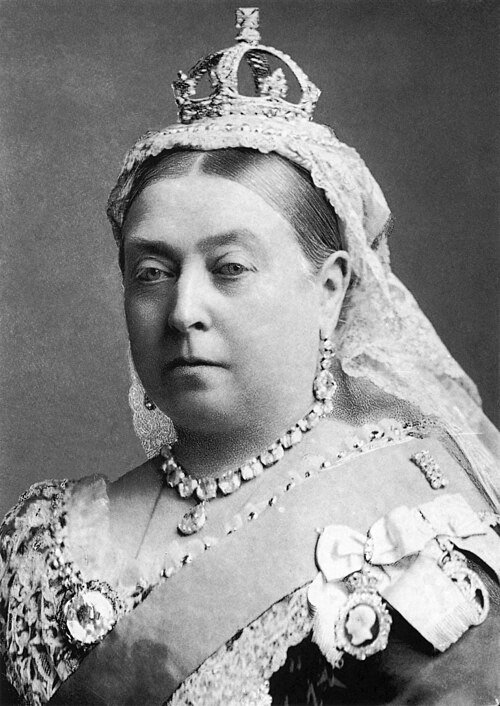
 Who is Victoria?
Princess Alexandrina Victoria was born on May 24, 1819, in Kensington Palace, London. Despite her relatively modest position within the royal family hierarchy at birth, she ascended to the throne upon the death of King William IV in 1837, becoming Queen Victoria at just eighteen years old.
Victoria’s early life was marked by a strict upbringing under the guidance of her mother and Sir John Conroy. The Kensington System, designed to keep young Alexandrina isolated from other royals and controlled by adults, aimed to ensure that she would be heavily influenced by her mother’s political allies once she became queen.
Victoria’s reign began on June 20, 1837, when she was informed of William IV’s death. She quickly gained popularity among the British public due to her youthful charm and genuine interest in serving the nation. Her marriage to Prince Albert of Saxe-Coburg and Gotha in 1840 further endeared her to the people as they celebrated the birth of their nine children, which included the future King Edward VII.
Queen Victoria’s long reign saw significant developments in British society. She supported the expansion of civil rights for women through the Married Women’s Property Act and was a patron of the arts and sciences. Her personal life took a tragic turn when Prince Albert died in 1861, leading to several years of mourning during which she rarely appeared in public.
Victoria’s influence extended beyond her own borders as Britain continued to exert its global dominance through colonial expansion. She was crowned Empress of India in 1876, further cementing the imperial status of the British monarchy.
Victoria died on January 22, 1901, at Osborne House on the Isle of Wight, after a reign that spanned sixty-three years and seven months. Her legacy is one of profound transformation in Britain, marked by industrialization, technological advancements, and significant social reforms.
Common Questions
When did Queen Victoria become queen?
Queen Victoria ascended to the throne on June 20, 1837, after the death of her uncle King William IV.
What were some of Queen Victoria's major accomplishments?
During her reign, Queen Victoria oversaw significant social reforms such as the Married Women’s Property Act and supported advancements in civil rights for women. She was also a patron of the arts and sciences.
Who did Queen Victoria marry?
Queen Victoria married Prince Albert of Saxe-Coburg and Gotha on February 10, 1840. Their marriage produced nine children.
How long was Queen Victoria's reign?
Queen Victoria reigned for a total of sixty-three years and seven months from June 20, 1837, until her death on January 22, 1901.
What impact did the death of Prince Albert have on Queen Victoria?
The death of Prince Albert in 1861 led to several years of intense mourning for Queen Victoria. She rarely appeared in public during this period and her personal life was profoundly affected by his loss.