 United States
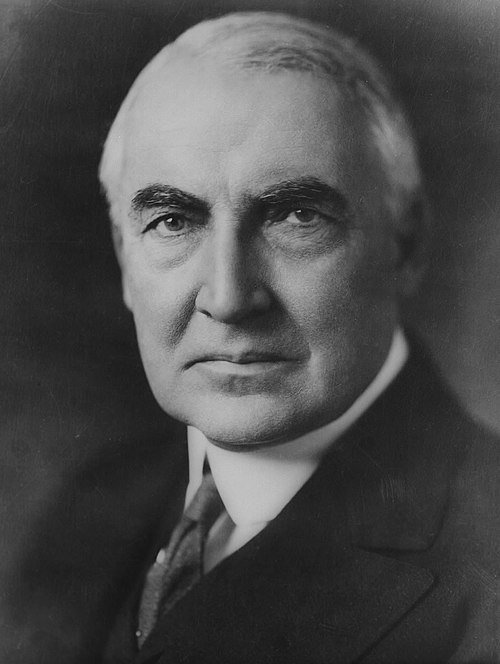
 Who is Warren G. Harding?
Warren G. Harding, one of America’s most enigmatic presidents, served as the nation’s leader from 1921 to 1923, a tenure marked by both significant achievements and profound controversy. Born on November 2, 1865, in Corsica, Ohio, Warren Gamaliel Harding came from modest beginnings but rose through the ranks of American politics to become one of the most prominent figures of his era.
Harding’s early life was shaped by his parents, George Tryon Harding and Phoebe Elizabeth Dickerson. His father worked in various occupations, including as a school teacher, land surveyor, and farmer, which provided young Warren with exposure to diverse settings. Growing up during the post-Civil War period, Harding developed an interest in journalism and politics from a young age.
Harding’s political career began in earnest when he entered Ohio Central College (now defunct), where he honed his oratory skills and cultivated relationships that would prove instrumental later on. After graduation, he became the editor of the Marion Star newspaper, which not only provided him with a platform to express his views but also served as a stepping stone for his political aspirations.
His rise to national prominence was marked by several significant milestones: in 1903, Harding won election as lieutenant governor of Ohio; he served in the U.S. Senate from 1915 to 1921; and in 1920, he secured the Republican nomination for president, an achievement that underscored his growing influence within the party.
Privately, Harding’s life was far more complex than the public persona suggested. He married Florence Kling DeWolfe in 1891, a union marked by mutual support and political ambition, though it also faced personal challenges such as alcoholism and infidelity on Harding’s part. Additionally, he had an extramarital affair with Nan Britton, which was revealed after his death.
Harding’s legacy is one of contradictions. While his administration oversaw significant economic recovery following World War I and enacted progressive legislation, it also suffered from widespread corruption and scandal, most notably the Teapot Dome Scandal. Harding died suddenly on August 2, 1923, in San Francisco during a cross-country tour, leaving behind a presidency that remains both celebrated for its domestic achievements and criticized for its moral failings.
Common Questions
Where was Warren G. Harding born?
Warren G. Harding was born on November 2, 1865, in Corsica, Ohio.
What were some of Harding's early career achievements?
Harding started his political career as the editor of the Marion Star newspaper and later served as lieutenant governor of Ohio from 1903 to 1905.
Who was Florence Kling DeWolfe, and what role did she play in Harding's life?
Florence Kling DeWolfe was Harding’s wife. They married in 1891, and Florence played a significant role in managing his political career and supporting him through personal challenges.
What major scandals marred Harding's presidency?
The most notable scandal during Harding's administration was the Teapot Dome Scandal, involving bribery and corruption within the Department of the Interior.
How did Warren G. Harding die?
Harding died on August 2, 1923, in San Francisco, California, while on a cross-country speaking tour. The cause of death was listed as a heart attack.