 United States
 Who is Paul Robeson?
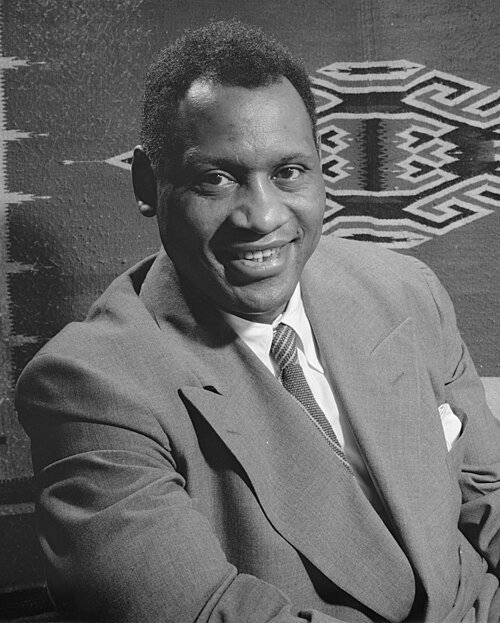
Paul Leroy Robeson, a towering figure in the realms of art and social justice, lived from April 9, 1898 to January 23, 1976. His life was marked by extraordinary achievements as an athlete, singer, actor, and political activist. Born into a family with roots deeply entrenched in abolitionist history, Robeson faced formidable challenges but emerged as one of the most influential African Americans of his time.
Robeson’s early years were shaped by his mother, Maria Louisa Bustill, who was descended from an important Quaker abolitionist family. His father, William Drew Robeson I, a Presbyterian minister and former slave, instilled in him a sense of dignity and resilience. Despite growing up in a racially divided America, Robeson excelled at Rutgers University–New Brunswick, where he became the school’s first African American football player to be named an All-American. His academic prowess also shone through as he graduated with high honors.
The rise of Paul Robeson was marked by his transition from law studies at Columbia Law School to a career in entertainment and politics. In 1923, he began performing on Broadway, eventually becoming renowned for his roles in plays like Shuffle Along. His rich baritone voice captivated audiences globally when he became an international star with the release of his first recording of “Ol’ Man River” in 1928. Robeson’s political activism intensified during World War II, where he used his fame to advocate for racial equality and workers’ rights.
Paul Robeson’s personal life was as complex as his public persona. He married Eslanda Goode, a chemist and anthropologist, in 1921; together they had one son, Paul Robeson Jr., born in 1927. Throughout their marriage, Eslanda supported her husband’s career and political activism, often serving as his manager and confidante.
The legacy of Paul Robeson is profound and enduring. He passed away on January 23, 1976, after suffering a series of strokes that left him incapacitated for the last years of his life. Despite facing relentless persecution during the McCarthy era due to his political beliefs, Robeson’s contributions to civil rights and anti-colonial movements worldwide remain celebrated. His ability to blend art with activism continues to inspire generations.
Common Questions
What was Paul Robeson's educational background?
Robeson studied at Rutgers University–New Brunswick, where he graduated valedictorian in 1919, and later attended Columbia Law School.
When did Paul Robeson start his acting career?
Paul Robeson began performing on Broadway in 1923 with the play All God’s Chillun Got Wings.
What political party was Paul Robeson associated with?
During the late 1940s, Robeson became involved with the Progressive Party and later supported the Communist Party USA.
How did Paul Robeson's family background influence his life?
Born to a Presbyterian minister father who was once enslaved and a mother from an abolitionist Quaker family, Robeson’s upbringing instilled in him values of resilience and dignity that shaped his lifelong advocacy for civil rights.
What were some of Paul Robeson's notable achievements as an athlete?
Robeson starred on the football team at Rutgers University–New Brunswick and was named to the All-American Football Team, making him the first African American student to achieve this honor in the school’s history.