 Germany
 Who is Clara?
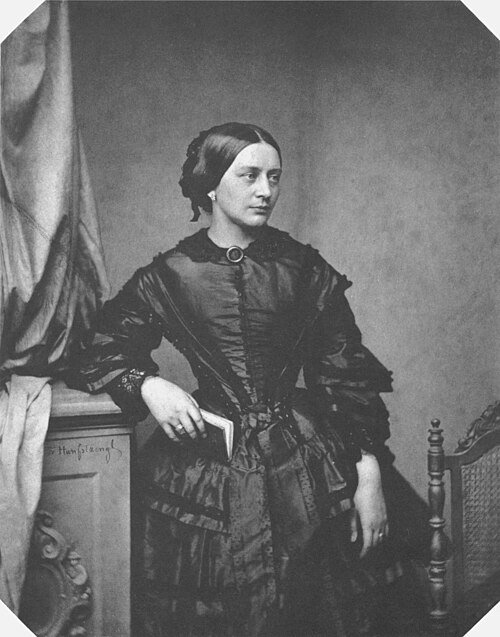
Clara Josephine Schumann (September 13, 1819 – May 20, 1896) was a pioneering musician of the Romantic era who left an indelible mark on music history as both a performer and composer. Born in Leipzig to Friedrich and Mariane Wieck, Clara grew up in a household rich with musical traditions. Her father, a strict but devoted teacher, instilled in her a rigorous training regimen that would later earn her international acclaim.
From an early age, Clara’s prodigious talent for the piano was evident. She gave her first public performance at just eight years old and continued to refine her skills under the guidance of her father, who recognized her potential as a child prodigy. By her teenage years, she had become renowned throughout Europe for her extraordinary performances.
Clara’s rise to prominence coincided with her relationship with Robert Schumann, whom she married in 1840 after a long courtship marked by legal battles over guardianship. Their union was one of the most celebrated and tumultuous marriages in musical history. Clara not only supported Robert’s career but also became a formidable artist in her own right. She championed his compositions through performances and advocacy, while simultaneously establishing herself as a renowned concert pianist.
Despite the challenges posed by her family responsibilities—including raising seven children—Clara maintained an active performing schedule and continued to compose music throughout her life. Her personal life was also marked by tragedy; she outlived Robert Schumann who died in 1856, and several of their children passed away prematurely.
Her legacy as a musician is multifaceted: Clara was not only celebrated for her virtuoso performances but also recognized for her compositions. She published more than twenty original works, including three piano concertos and other chamber pieces. In addition to her musical contributions, Clara played a crucial role in preserving the memory of Robert Schumann’s work after his death.
Clara Schumann’s influence extended beyond her lifetime; she was posthumously recognized for her significant contributions to music. Today, scholars and musicians continue to study her life and works, acknowledging her as one of the most important female figures in 19th-century classical music.
Common Questions
What were Clara Schumann's early influences?
Clara Schumann was heavily influenced by her father Friedrich Wieck, a strict but dedicated teacher who provided rigorous musical training. This included not only piano lessons but also composition and theory.
When did Clara Schumann begin performing publicly?
Clara Schumann gave her first public concert at the age of eight in 1827 in Leipzig's Gewandhaus, showcasing her early talent as a pianist.
What were some of Clara Schumann's most notable compositions?
Some of Clara Schumann’s notable works include her Piano Trio in G minor (Op. 17), the Piano Concerto in A minor (Op. 7), and several shorter pieces for piano such as the Three Romances (Op. 22).
How did Clara Schumann balance motherhood with her career?
Clara managed to maintain an active performing schedule alongside raising seven children with Robert Schumann, balancing family life with professional commitments through careful time management and a strong support network.
What was Clara Schumann's impact on music education?
Beyond her performances and compositions, Clara Schumann contributed significantly to music education. She taught piano at the Cologne Conservatory and shared insights into technique and interpretation through correspondence and masterclasses.