 China
China Who is Mao Zedong?
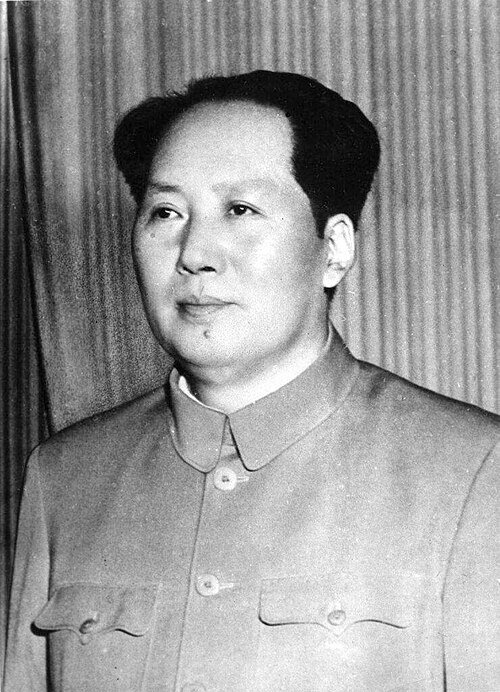
Mao Zedong was the founder and leader of the People’s Republic of China, shaping the course of modern Chinese history with his political ideology and revolutionary tactics. Born on December 26, 1893, in Shaoshan, Hunan Province, Mao came from a family of modest means but strong cultural heritage. His early years were marked by traditional Confucian education and exposure to Western ideas that would later fuel his revolutionary fervor.
Mao’s journey to prominence began at Hunan First Normal University where he became involved in student politics and the burgeoning communist movement. He joined the Chinese Communist Party (CCP) in 1921 and soon emerged as a key figure, leading peasant uprisings and military campaigns that culminated in the Long March of 1934-1935. This pivotal event solidified Mao’s leadership within the CCP.
As Chairman of the Communist Party from 1949 until his death in 1976, Mao played a central role in establishing the People’s Republic of China and implementing policies such as the Great Leap Forward (1958-1962) and the Cultural Revolution (1966-1976). These initiatives reshaped China’s social structure, economic landscape, and political dynamics.
Mao’s personal life was complex. He married four times: Luo Yixiu in 1910, Yang Kaihui in 1921, He Zizhen in 1937, and Jiang Qing in 1938. His marriages were often overshadowed by his political commitments, though they produced several children including Mao Anying, Mao Anqing, and Mao Anlong.
Mao’s legacy remains a subject of intense debate. He died on September 9, 1976, due to cardiovascular disease, leaving behind a China transformed but deeply divided over the merits of his rule. His writings and political theories continue to influence movements around the world, making Mao Zedong one of the most significant figures in twentieth-century history.
Common Questions
What was Mao Zedong's role during the Long March?
Mao played a crucial leadership role during the Long March from 1934 to 1935, which helped him consolidate power within the Communist Party.
When did Mao establish the People’s Republic of China?
The People's Republic of China was officially established on October 1, 1949, marking the end of decades of civil war and foreign intervention.
What were some major policies implemented under Mao’s rule?
Key policies included the Great Leap Forward in 1958 aimed at rapidly transforming China into a socialist society, and the Cultural Revolution starting in 1966 to eliminate capitalist and traditional elements from Chinese society.
How many wives did Mao Zedong have?
Mao was married four times: Luo Yixiu, Yang Kaihui, He Zizhen, and Jiang Qing.
What caused Mao's death?
Mao died on September 9, 1976, due to cardiovascular disease after a long period of declining health.
How did the Cultural Revolution start?
The Cultural Revolution began in May 1966 with a series of speeches and directives from Mao that aimed to purge the CCP of 'revisionist' elements and re-energize revolutionary fervor.
What was the impact of the Great Leap Forward?
The Great Leap Forward led to significant industrial growth but also caused widespread famine, affecting millions of people.
Who were Mao’s siblings?
Mao had two brothers: Mao Zemin and Mao Zetan. His brother Mao Zedong was involved in the early communist movement before his death.