 United States
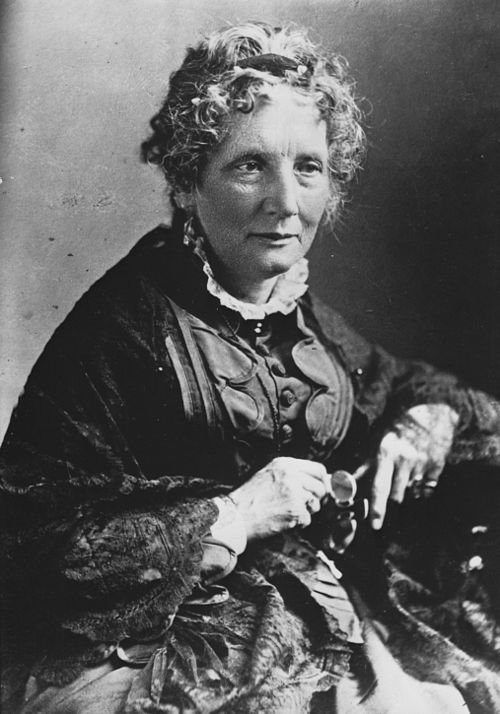
 Who is Harriet Beecher Stowe?
Harriet Elisabeth Beecher Stowe (June 14, 1811 – July 1, 1896) was a pivotal figure in American literature and social reform. Her most famous work, Uncle Tom’s Cabin, published in 1852, galvanized public opinion against slavery in the United States.
Born Elizabeth Harriet Beecher to Roxana Foote Beecher and Lyman Beecher in Litchfield, Connecticut, Stowe grew up in a family of preachers and educators. Her upbringing was marked by strict Calvinist principles, which heavily influenced her worldview and writing. She moved with her family to Cincinnati, Ohio, where she witnessed the harsh realities of slavery firsthand.
In 1836, at the age of twenty-five, Stowe married Calvin Ellis Stowe, a professor of theology. The couple had seven children together, but tragically lost two infants during their lifetime. In Cincinnati, she began her writing career and became an active member of the Underground Railroad.
The publication of Uncle Tom’s Cabin, which drew on her experiences in Ohio and interviews with escaped slaves, catapulted Stowe into international fame. The novel sold over 300,000 copies within a year and was translated into multiple languages. She traveled extensively throughout the United States and Europe to promote abolitionism.
Beyond Uncle Tom’s Cabin, Stowe authored several other influential novels such as Dred: A Tale of the Great Dismal Swamp (1856) and Sam Lawson’s Ten Misses (1873). Her personal life was marked by both triumphs and tragedies, including the loss of her son Fred in the Civil War.
Towards the end of her life, Stowe faced financial difficulties but continued to write until her death from Alzheimer’s disease on July 1, 1896. She left behind a legacy as one of America’s most celebrated authors and activists who used literature to challenge societal norms and advocate for human rights.
Common Questions
What is Harriet Beecher Stowe best known for?
Harriet Beecher Stowe is best known for her novel 'Uncle Tom's Cabin,' which highlighted the cruelties of slavery in the United States.
When was Harriet Beecher Stowe born and died?
Harriet Beecher Stowe was born on June 14, 1811, and passed away on July 1, 1896.
What were the names of Harriet Beecher Stowe's siblings?
Her famous siblings included Henry Ward Beecher, a prominent minister, Isabella Beecher Hooker, an advocate for women’s rights, and Catharine Beecher, a pioneer in education.
How did 'Uncle Tom's Cabin' impact society?
'Uncle Tom's Cabin' was instrumental in changing public opinion about slavery and contributed significantly to the abolitionist movement. It is often credited with influencing the political landscape leading up to the Civil War.
What other works did Harriet Beecher Stowe write besides 'Uncle Tom's Cabin'?
Stowe wrote several books including 'Dred: A Tale of the Great Dismal Swamp' and 'Sam Lawson’s Ten Misses', among others.
What was Harriet Beecher Stowe's family background?
She came from a prominent religious family in Connecticut. Her father, Lyman Beecher, was a Calvinist preacher, and her siblings included famous preachers Henry Ward Beecher and Isabella Beecher Hooker.
How many children did Harriet Beecher Stowe have?
Harriet Beecher Stowe had seven children with her husband Calvin Ellis Stowe. She experienced significant personal loss throughout her life, including the deaths of two infants.
What was the cause of death for Harriet Beecher Stowe?
Stowe died on July 1, 1896, due to complications from Alzheimer's disease.