 United States
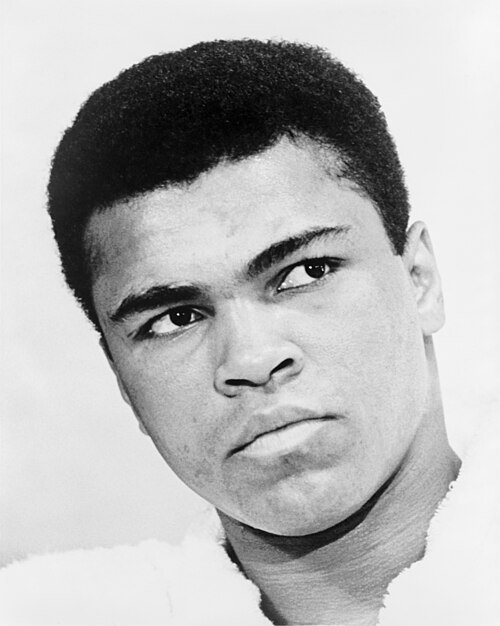
 Who is Muhammad Ali?
When Muhammad Ali (born Cassius Marcellus Clay Jr.) stepped into the boxing ring, he didn’t just fight opponents; he fought for civil rights and against war. Born on January 17, 1942, in Louisville, Kentucky, to Odessa Grady Clay and Cassius Marcellus Clay Sr., Ali’s early life was marked by a blend of family support and racial tension.
From his formative years through his career as a boxer, Ali’s journey to becoming ‘The Greatest’ is one of relentless ambition and transformative impact. At the age of 12, he began training under boxing coach Joe Martin, who helped him hone his skills. By 1960, at the age of 18, Ali won a gold medal in the light heavyweight division at the Rome Olympics.
His professional career saw several key milestones: In 1964, he became the world heavyweight champion by defeating Sonny Liston. That same year, he changed his name to Muhammad Ali after converting to Islam and affiliating with the Nation of Islam. A controversial figure due to his outspoken nature and refusal to be drafted into military service during the Vietnam War, Ali faced legal challenges but continued to fight and inspire.
Off the boxing ring, Ali’s personal life was as compelling as his public persona. He married Sonji Roi in 1964 but they divorced shortly after. Later, he married Khalilah Ali (née Abdul Rahman) in 1972. His marriages also included Veronica Porché (from 1986 to 1996) and Yolanda Williams (in the mid-1990s). He had nine children from his various relationships, including boxing star Laila Ali.
Ali’s legacy extends beyond sports; he was a symbol of resistance against racial injustice and war. His passing on June 3, 2016, marked the end of an era but not the cessation of influence. Through his activism and humanitarian work, Muhammad Ali left behind a powerful legacy that continues to inspire generations.
Common Questions
When did Muhammad Ali change his name?
Muhammad Ali changed his name from Cassius Marcellus Clay Jr. in 1964 after joining the Nation of Islam.
What were some of Muhammad Ali's boxing achievements?
Ali won a gold medal at the Rome Olympics in 1960 and became world heavyweight champion by defeating Sonny Liston in 1964. He also held multiple world titles throughout his career.
How did Muhammad Ali become involved with civil rights issues?
Muhammad Ali was a prominent figure in the civil rights movement, advocating for African American equality and refusing to be drafted into military service during the Vietnam War on moral grounds.
What is Muhammad Ali's family background like?
Born to Odessa Grady Clay and Cassius Marcellus Clay Sr., Ali grew up in Louisville, Kentucky. He had one sibling, Rahman (born Earnest).
How did Muhammad Ali influence the world outside of boxing?
Ali's impact extended beyond sports; he was a voice for civil rights and anti-war activism, using his platform to advocate for social justice issues.
What is Muhammad Ali's educational background like?
Muhammad Ali attended public schools in Louisville and later enrolled at Santa Monica College in California.
How many children did Muhammad Ali have?
Muhammad Ali had nine children from his various relationships, including daughters Maryum, Laila, Hana, and Rasheda, as well as sons Muhammad Jr., Jamill, and Asaad.