 United States
 Who is T. S. Eliot?
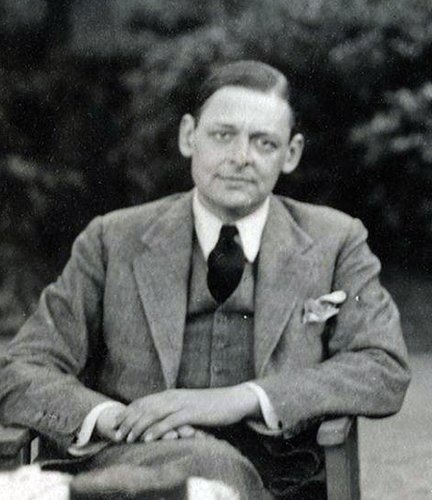
T. S. Eliot, the renowned poet and critic, remains a pivotal figure in modernist literature, celebrated for his innovative approach to poetry and prose that reshaped the landscape of twentieth-century English letters from 1888 until his death on January 4, 1965.
Born Thomas Stearns Eliot on September 26, 1888, in St. Louis, Missouri, he was part of a family steeped in academia and the arts. His father, Henry Ware Eliot, was a successful businessman and his mother, Charlotte Champe Stearns, had an interest in literature and the classics.
Eliot’s early education included Milton Academy and Harvard University, where he studied philosophy and began to explore poetry. A formative period came when he moved to England in 1914, immersing himself in the vibrant literary scene of London and meeting influential figures such as Ezra Pound.
His career took off with the publication of his poem The Love Song of J. Alfred Prufrock in 1917, but it was the epic poem The Waste Land, published in 1922, that secured Eliot’s place as one of the most significant poets of the era. His work as a critic and editor also earned him a reputation for intellectual rigor and sharp analysis.
Personal life played a role in shaping his public persona; his first marriage to Vivienne Haigh-Wood was tumultuous, though it ended only after her death in 1947. In 1957, he married Valerie Fletcher, who became his devoted caretaker until his passing from pulmonary emphysema on January 4, 1965.
Eliot’s legacy is vast and enduring: a Nobel Prize in Literature (1948), pioneering literary criticism, and poetry that continues to inspire new generations of writers. His influence extends beyond literature into philosophy, religion, and even music, marking him as one of the most influential voices of the twentieth century.
Common Questions
What are T.S. Eliot's major works?
The Waste Land (1922) is his most famous poem, but he also wrote plays like The Cocktail Party and numerous essays in literary criticism.
When did T.S. Eliot move to England?
Eliot moved to England in 1914 where he would spend the rest of his life, becoming a British citizen in 1927.
What is the significance of 'The Waste Land' by T.S. Eliot?
The Waste Land is considered one of the most important poems of the twentieth century for its exploration of modern despair and fragmentation, set against a backdrop of classical allusions.
How did T.S. Eliot's personal life affect his work?
His marriage to Vivienne Haigh-Wood was particularly influential; their relationship was fraught with tension but also provided rich material for some of his literary works and criticism.
What is the legacy of T.S. Eliot in literature?
Eliot's impact on modernist poetry and prose, along with his critical theories, has been profound, shaping literary studies and influencing countless writers around the world.
Did T.S. Eliot win any awards?
Yes, he won the Nobel Prize in Literature in 1948 for his outstanding contributions to English literature.