 United States
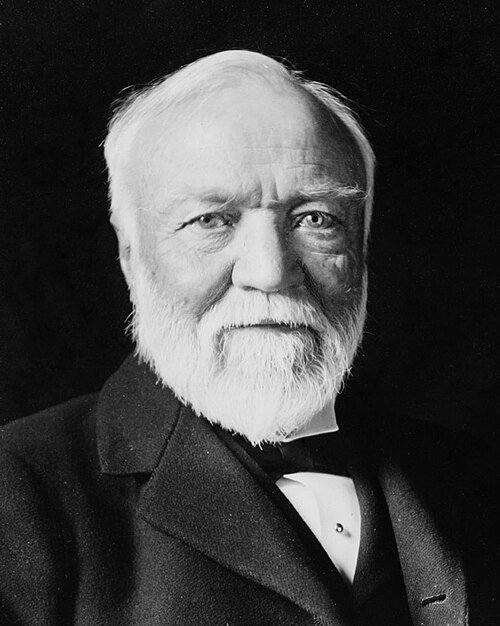
 Who is Andrew Carnegie?
Andrew Carnegie’s life spanned an era of immense industrial transformation. Born on November 25, 1835, in Dunfermline, Scotland, he would go on to become one of the most influential figures of his time, leaving a lasting mark not only through his business acumen but also as a philanthropist.
Carnegie’s early years were marked by hardship. His family immigrated to Pittsburgh when Andrew was just 13, seeking better opportunities in America. Working tirelessly from dawn till dusk, Carnegie found employment in various manual labor jobs before securing positions that offered him an education and connections within the burgeoning industrial landscape of Pennsylvania.
From these humble beginnings, Carnegie rose through the ranks of industry with remarkable speed. By age 30, he was already a partner in several companies and had established himself as a shrewd businessman capable of navigating the complexities of American capitalism. His rise to prominence accelerated after he founded the Keystone Bridge Company and later took control of the Edgar Thomson Steel Works, which would become the foundation of Carnegie Steel Corporation.
Carnegie’s career peaked with his ownership of U.S. Steel, a company that dominated the global steel industry for decades. Throughout his ascent, Carnegie also made significant strides in other fields such as banking and telecommunications. His influence extended beyond business into academia; he was instrumental in founding several universities, including what is now known as Carnegie Mellon University.
On the personal front, Carnegie’s life was marked by a strong partnership with his wife, Louise Whitfield Carnegie, whom he married in 1887. Together they had a daughter, Margaret, who would go on to become an important figure in her own right within philanthropic circles.
Carnegie’s legacy is multifaceted and enduring. He was nominated for the Nobel Peace Prize in recognition of his efforts towards international peace initiatives through his writings and support for organizations dedicated to conflict resolution. His passing on August 11, 1919, left behind a vast network of educational institutions, public libraries, and cultural centers that continue to enrich communities across the globe.
Common Questions
What were Andrew Carnegie's early jobs in America?
Carnegie started as a bobbin boy at a cotton factory, then worked in various manual labor roles before securing positions that offered education and connections. He later held significant posts in the railroad industry.
How did Andrew Carnegie become wealthy?
By leveraging his position within the railroads to invest in steel manufacturing, Andrew Carnegie founded Carnegie Steel Corporation which became extremely profitable due to innovations in mass production methods.
What were some of Andrew Carnegie's philanthropic contributions?
Carnegie donated millions to establish public libraries, museums, and universities across America. Notably, he funded over 2500 public library buildings and endowed the Carnegie Endowment for International Peace.
When did Andrew Carnegie found U.S. Steel?
Andrew Carnegie sold his steel company to J.P. Morgan in 1901, which then became U.S. Steel Corporation, a corporation valued at over $480 million at the time.
What was Andrew Carnegie's relationship with his wife like?
Louise Whitfield Carnegie and Andrew were married in 1887. They had one daughter, Margaret, and together they supported various philanthropic causes.