-
01
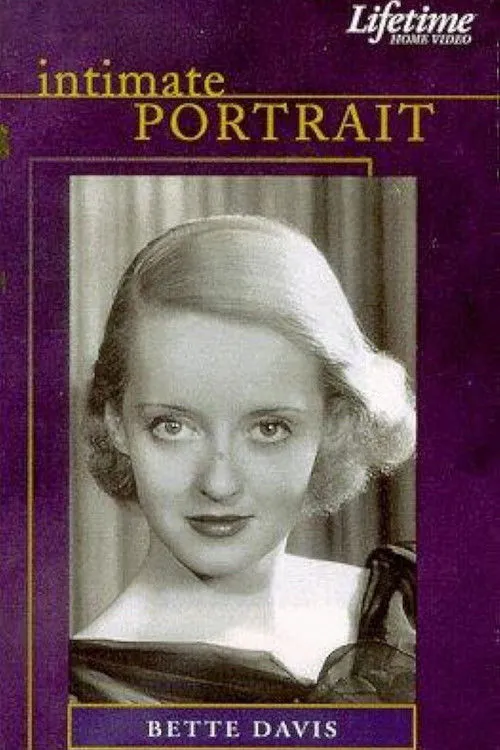
Bette Davis achieved the milestone of being the first actor ever to earn ten Academy Award nominations.
-
02
According to her August 1982 Playboy interview, in her youth she posed nude for an artist, who carved a statue of her placed in a public spot in Boston. The statue, four dancing nymphs, was later found in a private Massachusetts collection.
-
03
During the making of What Ever Happened to Baby Jane? 1962, Davis had a Coca-Cola machine installed on the set because Joan Crawford was associated with Pepsi. Crawford retaliated by putting weights in her pockets when Davis dragged her across the floor.
-
04
After the song Bette Davis Eyes became a hit, she wrote to singer Kim Carnes and the songwriters, asking how they knew so much about her. She loved the song because her grandson thought it was cool that his grandmother had a hit written about her.
-
05
In October 1941, she was elected the first female president of the American Academy of Motion Picture Arts and Sciences, but resigned less than two months later, feeling the Academy wanted her as a figurehead.
-
06
Described the last three decades of her life as a my macabre period. She hated being alone at night and found growing older terrifying.
-
07
At John Murray Anderson’s Dramatic School, another classmate was sent home because she was too shy, predicted to never succeed. That girl was Lucille Ball.
-
08
In 1982, she received the Distinguished Civilian Service Medal, the Defense Department’s highest civilian award, for founding and running the Hollywood Canteen during World War II.
-
09
She was one of two actresses with Faye Dunaway to have two villainous roles ranked in AFI’s 100 Years of Heroes and Villains: Regina Giddens in The Little Foxes 1941 at #43 and Baby Jane Hudson in What Ever Happened to Baby Jane? 1962 at #44.
-
10
When she died in 1989, her estate was valued at between $600,000 and $1 million. Half went to her son Michael Merrill and half to her secretary Kathryn Sermak. Her daughter B.D. Hyman was left nothing due to her book My Mother’s Keeper.
-
11
While filming Death on the Nile 1978, she shared a dressing room with Angela Lansbury and Maggie Smith because no individual dressing rooms were allowed.
-
12
She was originally offered the role of Sandra Kovac in The Great Lie 1941 but chose the less showy part of Maggie Patterson, boosting Mary Astor’s career; Astor won Best Supporting Actress for that role.
-
13
In 1942, she was the highest-paid woman in the United States.
-
14
In 2001, Steven Spielberg bought her 1938 Best Actress Oscar for Jezebel at auction for $578,000 and donated it to the Academy.
-
15
She was the first actor of any gender to earn seven, eight, nine, and ten Academy Award nominations in the acting categories.
-
16
In the early 1980s, she said her only career regret was never appearing in a movie with Clark Gable, John Wayne, Gary Cooper, or James Stewart due to Warner Bros. restrictions.
-
17
She turned down the role of Rose Sayer in The African Queen 1951 because she was pregnant.
-
18
When Universal wanted to change her name to Bettina Dawes, she refused, saying it sounded like Between the Drawers.
-
19
Her co-star Joan Crawford once said they had nothing in common, but they shared many personal similarities: absent fathers, rising from poverty, four marriages, adopting children, and having daughters who wrote negative books.
-
20
She suffered a stroke and had a mastectomy in 1983.
-
21
She was very active in leading Girl Scouts and Cub Scouts, having been a decorated Girl Scout in her childhood.
-
22
Nominated for an Academy Award five consecutive years 1939-1943, sharing the record for most consecutive nominations with Greer Garson.
-
23
She received two stars on the Hollywood Walk of Fame: for Motion Pictures at 6225 Hollywood Blvd. and for Television at 6335 Hollywood Blvd.
-
24
For years, impressionists used the phrase Pee-tah! Pee-tah! Pee-tah!, but she said she had no idea who Pee-tah was and never met anyone by that name.
-
25
Her image appeared on a 42-cent U.S. commemorative stamp in the Legends of Hollywood series, issued September 18, 2008.
-
26
Her second husband Arthur Farnsworth died after a fall on Hollywood Boulevard; he had previously banged his head on a train and fell down stairs at their New Hampshire home.
-
27
She filmed a television pilot for The Bette Davis Show in 1965, which was not picked up but aired as a TV movie titled The Decorator.
-
28
Although publicly critical of her father Harlow Davis for divorcing her mother, her private scrapbook contained congratulatory notes from him, and she funded her son’s law education, following his career path.
-
29
She was honored by James Stewart, Angela Lansbury, Hume Cronyn, and Jessica Tandy at her Kennedy Center Honors.
-
30
She sent a letter to Meryl Streep early in her career, saying she felt Streep was her successor as the First Lady of the American Screen. She also admired Debra Winger and Sissy Spacek.
-
31
On her sarcophagus is written She did it the hard way, a line she credited to writer/director Joseph L. Mankiewicz.
-
32
During Marked Woman 1937, she insisted her own doctor bandage her face more realistically for a court scene, dissatisfied with the tiny bandage from the makeup department.
-
33
Her performance as Margo Channing in All About Eve 1950 is ranked #5 on Premiere magazine’s 100 Greatest Performances of All Time in 2006.
-
34
Joan Crawford actively campaigned against Davis winning the Best Actress Oscar for What Ever Happened to Baby Jane? 1962, even offering to accept for Anne Bancroft. Crawford reportedly touched Davis’s shoulder and said Excuse me, I have an Oscar to accept when Bancroft won.
-
35
She appeared in four films selected for the National Film Registry: Jezebel 1938, Now, Voyager 1942, All About Eve 1950, and What Ever Happened to Baby Jane? 1962.
-
36
In Who’s Afraid of Virginia Woolf? 1966, Elizabeth Taylor does an exaggerated impression of Davis saying What a dump! from Beyond the Forest 1949. Davis said she delivered it more subtly but later performed it campily in her one-woman show, saying I imitated the imitators.
-
37
Life magazine described her performance in Of Human Bondage 1934 as probably the best performance ever recorded on the screen by a U.S. actress.
-
38
She told Barbara Walters that her daughter’s book My Mother’s Keeper was as devastating as her stroke.
-
39
Voted the 10th Greatest Movie Star of all time by Entertainment Weekly.
-
40
Smoked 100 Vantage cigarettes a day, even after suffering four strokes in 1983.
-
41
Played dual roles of twin sisters in A Stolen Life 1946 and Dead Ringer 1963.
-
42
During promotion for What Ever Happened to Baby Jane? 1962, she told an interviewer that studio head Jack L. Warner said he wouldn’t give a plugged nickel for either of the two old broads. Crawford sent a telegram saying In future, please do not refer to me as an old broad!
-
43
After her first picture, she overheard Universal executive Carl Laemmle Jr. say about her: She’s got as much sex appeal as Slim Summerville. Who wants to get her at the end of the picture?
-
44
She had a long-running feud with Miriam Hopkins, starting from their stage days. They competed in The Old Maid 1939 and Old Acquaintance 1943. Davis only good word about Hopkins was that she was a good actress, otherwise a real bitch.
-
45
She was made a Fellow of the British Film Institute in recognition of her outstanding contribution to film culture.
-
46
Interred at Forest Lawn Memorial Park Hollywood Hills in Los Angeles, California, just outside the Court of Remembrance.
-
47
Wrote the book This ‘n That in response to her daughter’s book My Mother’s Keeper.
-
48
Credited George Arliss with giving her her break by choosing her as his leading lady in The Man Who Played God 1932.
-
49
Attended Cushing Academy in Ashburnham, Massachusetts; an award in her name is given annually to scholar-athletes.
-
50
In a 1971 interview with Dick Cavett, she said her salary during Jezebel 1938 was $650 per week.