-
01
Gershwin had an allergy to champagne.
-
02
Some consider Gershwin the greatest American composer of the twentieth century.
-
03
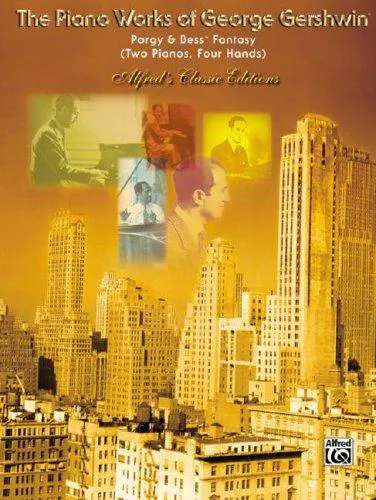
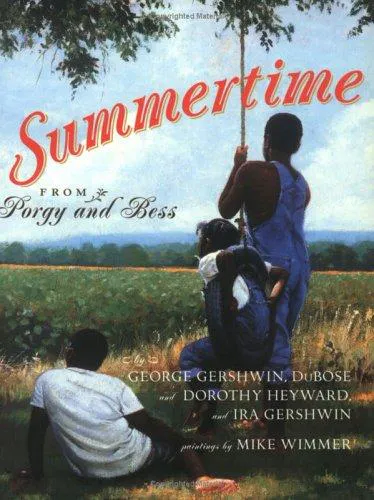
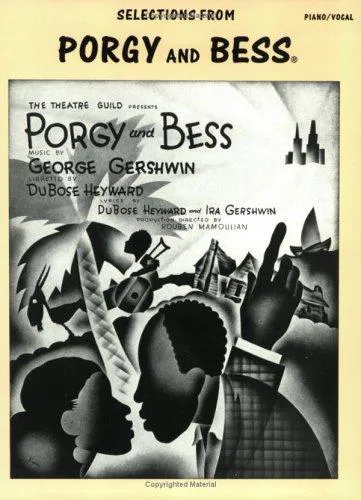
His Porgy and Bess was the first American opera ever performed at La Scala Opera House in Milan, Italy.
-
04
Porgy and Bess was the first nearly all-black opera to be performed in the Soviet Union.
-
05
Gershwin was 25 years old when he composed Rhapsody in Blue in 1924.
-
06
As of 2003, Porgy and Bess remains the most beloved and famous American opera ever written.
-
07
The Hollywood house Gershwin lived in was later owned by Jose Ferrer and Rosemary Clooney.
-
08
His last words were Fred Astaire.
-
09
He was the younger brother of lyricist Ira Gershwin.
-
10
Gershwin appears on an 8-cent US commemorative postage stamp in the American Arts series issued February 28, 1973.
-
11
He was portrayed by Robert Alda in the somewhat fictionalized biopic Rhapsody in Blue 1945.
-
12
Rhapsody in Blue was hugely successful at its premiere, coming at the end of a reportedly extremely dull concert.
-
13
Gershwin was the first composer to successfully use jazz elements in works written for the concert hall.
-
14
He won the 1932 Pulitzer Prize for Drama for the musical Of Thee I Sing, collaborating with George S. Kaufman, Morrie Ryskind, and Ira Gershwin.
-
15
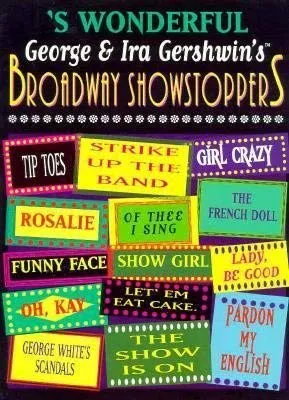
Some of his stage musicals, such as Oh, Kay! and Tip-Toes, were made into silent pictures but never re-made in the sound era.
-
16
His satirical musical Of Thee I Sing was never filmed by Hollywood because it was considered too political.
-
17
The first two complete recordings of Porgy and Bess won back-to-back Grammy Awards for Best Opera Recording in 1976 and 1977.
-
18
Although Gershwin completed only four songs for The Goldwyn Follies 1938 before his death, three are considered among his best: Love Walked In, Love Is Here to Stay, and I Was Doing Alright.
-
19
He and Ira have a star on the Hollywood Walk of Fame for Recording at 7083 Hollywood Boulevard.
-
20
Gershwin was brother-in-law of Leonore Gershwin.
-
21
He was inducted into the Songwriters Hall of Fame in 1970.
-
22
A man named Alan Gershwin who long claimed to be his son was actually born Albert Schneider.
-
23
His sister Frances Gershwin Godowsky was born December 26, 1906, and died January 18, 1999.
-
24
Ira Gershwin’s musical Porgy and Bess at the Court Theatre in Chicago was nominated for a 2011 Equity Joseph Jefferson Award.
-
25
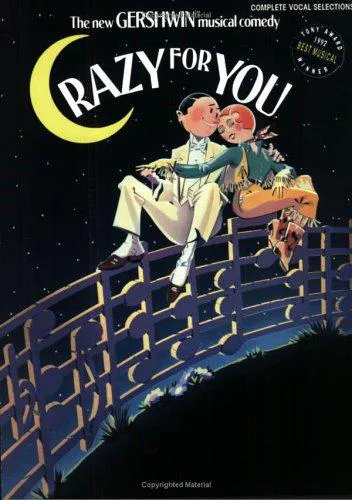
Ira Gershwin’s musical Crazy for You at Drury Lane Productions Theatre in Chicago was nominated for a 2017 Joseph Jefferson Equity Award.
-
26
After Gershwin’s birth, his family moved 28 times in New York.
-
27
Gershwin was of Ukrainian-Jewish ancestry; his grandfather Jakov Gershowitz was from Odesa.
-
28
His birth certificate identifies him as Jacob Gershwine, pronounced Gersh-vin in Russian and Yiddish.
-
29
Gershwin’s first published song was When You Want Em, You Cant Get Em, When Youve Got Em, You Dont Want Em in 1916.
-
30
He worked for Aeolian Company and Standard Music Rolls, recording and arranging piano rolls under pseudonyms like Fred Murtha and Bert Wynn.
-
31
Gershwin met songwriter William Daly in the late 1910s; they collaborated on several Broadway musicals.