 Ireland
 Who is James Joyce?
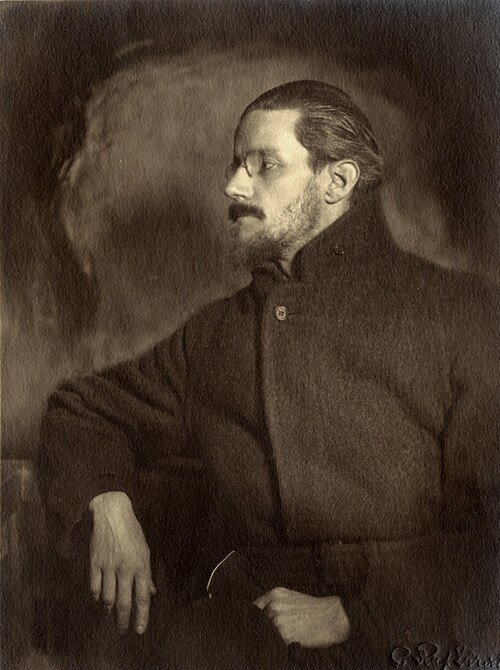
James Augustine Aloysius Joyce, the Irish literary giant of the early twentieth century, lived from February 2, 1882, to January 13, 1941. His life was a testament to his relentless pursuit of artistic excellence and personal freedom, which profoundly influenced modernist literature.
James Joyce was born in Dublin into an artistic but financially unstable family. He grew up on Clanbrassil Street, where his father’s precarious career as a civil servant and later a rate collector deeply affected the family’s financial situation. Despite these challenges, James excelled academically at Clongowes Wood College and Belvedere College before attending University College Dublin.
His journey to prominence began with the publication of ‘Dubliners’ in 1914, a collection that captured the essence of Dublin’s lower middle class life. But it was his novel Ulysses, published in Paris in February 1922, which secured Joyce’s place as one of the most innovative writers of his time. The book is renowned for its complex stream-of-consciousness narrative and its detailed exploration of Dublin through a single day.
In addition to writing novels, Joyce worked as a teacher and journalist during various periods in his life. His extensive travels took him from Ireland to Europe where he settled in Paris after 1920. In this cosmopolitan city, he continued refining his literary style and mentored fellow writers.
James’s personal life was marked by his long-term relationship with Nora Barnacle, whom he met at the age of 20 on June 16, 1904—a date later celebrated in literature as Bloomsday. They never officially married but had two children together: Giorgio and Lucia Joyce. Despite their unconventional partnership, they remained deeply committed to each other throughout his life.
James Augustine Aloysius Joyce’s legacy is vast and continues to influence literary circles globally. His final work, Finnegans Wake, published in 1939 just before his death from peritonitis on January 13, 1941, pushed the boundaries of language and narrative structure even further.
Common Questions
What were James Joyce's early influences?
Joyce was influenced by his Irish heritage, Catholic education at Clongowes Wood College and Belvedere College, and exposure to Dublin’s literary circles.
How did 'Ulysses' impact literature?
'Ulysses', published in 1922, revolutionized the novel form with its use of stream-of-consciousness narrative techniques.
Why is James Joyce considered a modernist writer?
Joyce's works like 'Ulysses' and 'Finnegans Wake' are celebrated for their innovative narrative structures and complex linguistic experiments, hallmarks of the Modernist movement.
Did James Joyce have any children?
Yes, he had two children with Nora Barnacle: Giorgio (born 1905) and Lucia (born 1907).
What is Bloomsday?
Bloomsday celebrates the life of James Joyce on June 16th each year, commemorating the date set in 'Ulysses' where the novel's events unfold.
How did James Joyce contribute to modern literature?
Joyce contributed immensely by experimenting with narrative techniques and expanding the scope of language, influencing countless writers after him.