 United Kingdom
 Who is Niels Bohr?
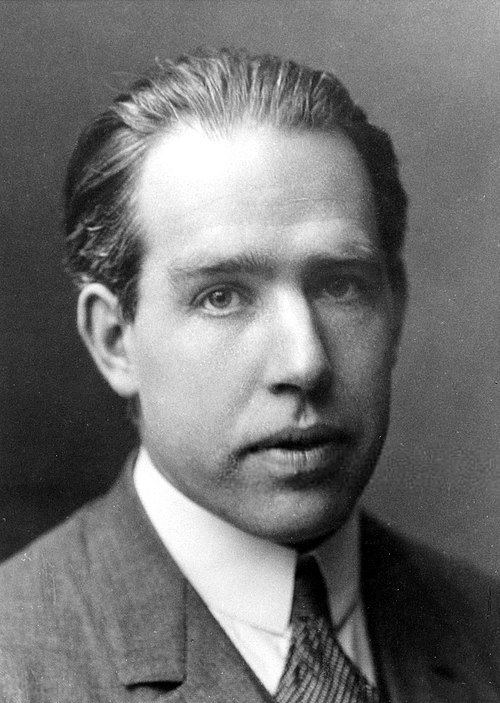
Niels Henrik David Bohr, born on October 7, 1885, and passing away on November 18, 1962, remains one of the most influential figures in the history of physics. His contributions to quantum mechanics were groundbreaking and his legacy continues to shape scientific understanding.
Bohr was born into an academic family in Copenhagen, Denmark. His father, Christian Bohr, was a professor of physiology at the University of Copenhagen, while his mother, Ellen Adler Bohr, came from a prominent Jewish-Danish banking family. Niels had a strong bond with his brother Harald, who also became a distinguished mathematician. Their father encouraged them to engage in scientific discussions and debates from an early age.
Bohr’s academic journey began at the University of Copenhagen where he studied physics under Professor Christian Christiansen and later attended Trinity College, Cambridge, for further studies. It was during his time in Cambridge that Bohr developed a keen interest in atomic structure, laying the groundwork for his future work in quantum mechanics.
In 1922, Niels Bohr received the Nobel Prize in Physics for his work on the structure of atoms and molecules. His model of the atom, which introduced the concept of electron shells and orbitals, became a cornerstone of modern physics. In addition to his research, Bohr was also deeply involved in teaching and mentoring young scientists at the University of Copenhagen where he established the Institute of Theoretical Physics.
Bohr’s personal life was characterized by a long-lasting marriage to Margrethe Nørlund in 1912. Together they had six sons, though only three survived into adulthood: Aage Bohr, Hans Henrik Bohr, and Ernest Bohr. Despite his scientific fame, Bohr maintained an interest in other fields such as soccer, where he played for Akademisk Boldklub during his university days.
Niels Bohr’s legacy is marked not only by his profound impact on the field of physics but also by his efforts to foster international cooperation among scientists. He was a key figure in establishing CERN (European Organization for Nuclear Research) and played an important role in advising governments during World War II about nuclear weapons.
Common Questions
What did Niels Bohr study at the University of Copenhagen?
Niels Bohr studied physics under Professor Christian Christiansen, focusing on atomic structure.
When did Niels Bohr win the Nobel Prize in Physics?
Niels Bohr received the Nobel Prize in Physics in 1922 for his work on the structure of atoms and molecules.
How many children did Niels Bohr have?
Niels Bohr had six sons with Margrethe Nørlund, though only three survived into adulthood: Aage, Hans Henrik, and Ernest.
What is Niels Bohr's model of the atom known for?
Bohr's model introduced the concept of electron shells and orbitals, providing a framework for understanding atomic structure.
How did Niels Bohr contribute to international scientific cooperation during World War II?
Niels Bohr played an important role in advising governments about nuclear weapons and was a key figure in establishing CERN.