 Germany
 Who is Sun Yat-Sen?
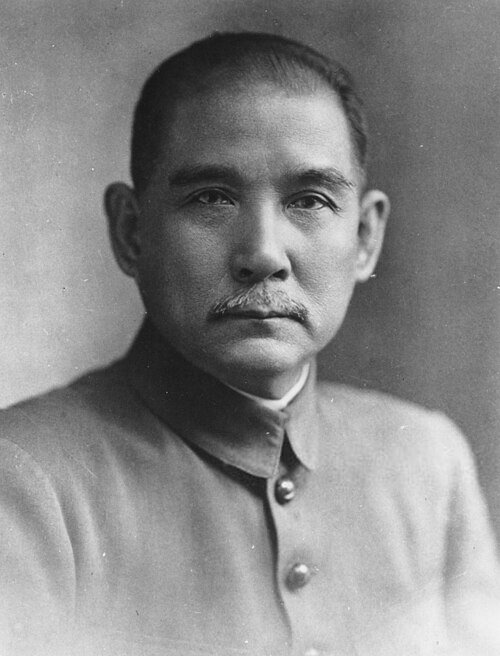
Dr. Sun Yat-sen (1866-1925) stands as one of the most influential figures in modern Chinese history. A medical doctor by training but an indefatigable politician at heart, he was a visionary leader who sought to unite China and establish a republic.
He was born on November 12, 1866, into a farming family in Xiangshan County (now Zhongshan City), Guangdong Province. Sun’s early life was marked by hardship; his father, Sun Dacheng, struggled to make ends meet while his mother, Madame Yang, provided the nurturing influence that shaped young Sun’s character.
In 1879, at age thirteen, Sun left for Hawaii where he lived with his elder brother, Sun Mei. He returned to China after four years and enrolled in a church-run school in Honolulu. This exposure to Western education was pivotal; it introduced him to Christian values and democratic ideals which would later influence his political philosophy.
Upon returning from Hawaii, Sun continued his studies at the Hong Kong College of Medicine for Chinese where he trained as a physician. However, his true passion lay elsewhere: politics. In 1892, after graduating, Sun attempted to practice medicine in Macau and Canton but found himself drawn into political activism against the Qing Dynasty.
His first major step towards revolution came when he formed the Revive China Society (RCS) in Honolulu on November 24, 1894. This was followed by several failed uprisings that led to his exile, during which time he traveled extensively and gathered support for a democratic republican government. His political philosophy, known as the Three Principles of the People—nationalism, democracy, and people’s livelihood—became foundational for Chinese nationalism.
By 1905, Sun had established the Tongmenghui (Alliance Society), which united various revolutionary groups under a single banner. The organization’s goal was to overthrow the Qing government and establish a republic. After years of struggle, Sun’s efforts culminated in the Xinhai Revolution on October 10, 1911, leading to the abdication of Emperor Puyi and the establishment of the Republic of China.
As president of the newly formed republic from 1912-1916 and again briefly in 1923-1924, Sun worked tirelessly towards his vision for a unified and prosperous China. Despite facing numerous challenges including military intervention by warlords, he remained steadfast.
His personal life was marked by multiple marriages that reflected his political alliances. He married Lu Muzhen in 1885, Chen Cuifen in 1906, Haru Asada (Yamakawa Hiroko) in Japan in 1907, and Kaoru Otsuki in 1912. His final marriage to Soong Ching-ling in 1915 was the most enduring; she remained a steadfast supporter until his death.
Dr. Sun Yat-sen passed away on March 12, 1925, at age 58, after battling liver cancer. His legacy lives on through the numerous memorials and educational institutions named in his honor across China, including Zhongshan University (Sun Yat-sen University) founded in 1924. He is revered as a national hero for his role in ending imperial rule and laying the groundwork for modern Chinese democracy.
Common Questions
What were Sun Yat-sen's early life experiences?
Sun Yat-sen was born into a farming family in Xiangshan County, Guangdong Province. He left home at age thirteen to live with his brother in Hawaii and received education there before returning to China.
What were Sun Yat-sen's key achievements?
Dr. Sun Yat-sen established the Revive China Society (RCS) in 1894 and later founded the Tongmenghui, which united revolutionary groups. His leadership culminated in the Xinhai Revolution of 1911 that overthrew the Qing Dynasty.
How did Sun Yat-sen's political philosophy influence China?
His Three Principles of the People—nationalism, democracy, and people’s livelihood—became foundational for Chinese nationalism and guided the establishment of the Republic of China in 1912.
What were some of Sun Yat-sen's marriages?
Sun Yat-sen was married to Lu Muzhen, Chen Cuifen, Haru Asada (Yamakawa Hiroko), Kaoru Otsuki, and Soong Ching-ling. His final marriage to Soong Ching-ling in 1915 was the most enduring.
What is Sun Yat-sen's legacy?
Sun Yat-sen is revered as a national hero for his role in ending imperial rule and laying the groundwork for modern Chinese democracy. Memorials and educational institutions, such as Zhongshan University (Sun Yat-sen University), honor his contributions.