 France
 Who is Victor Hugo?
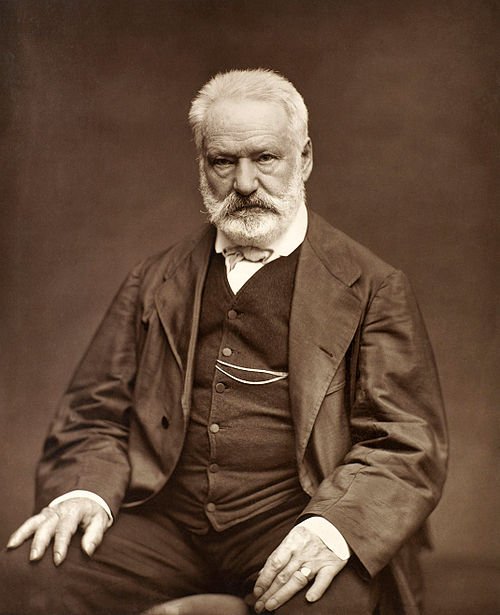
Victor-Marie Hugo (February 26, 1802 – May 22, 1885), known as Victor Hugo, was a towering figure in French literature and politics whose works continue to captivate readers around the world. Born into the affluent Hugo family of Toiras, Hugo’s life was marked by literary brilliance, political activism, and personal tragedy.
Hugo’s early years were spent in Paris where he received an education at prestigious institutions such as Lycée Louis-le-Grand. Despite his father’s military career taking him away frequently, Victor formed a close bond with his mother Sophie Trébuchet and his godfather Victor Lahorie. This relationship was instrumental in shaping Hugo’s initial views on society and politics.
Hugo rose to prominence as a writer during the Romantic era of French literature. He published his first book of poetry, Odes et poésies diverses, at age 18, which brought him immediate acclaim. His career was further solidified with novels like Notre-Dame de Paris (1831) and Les Misérables (1862), both of which are still widely read today.
In his personal life, Hugo married Adèle Foucher in 1822, with whom he had five children: Léopoldine, Charles, François-Victor, Adèle, and Eugène. Tragedy struck when his beloved daughter Léopoldine drowned at the age of nineteen, an event that deeply affected Hugo’s work moving forward.
Beyond literature, Hugo was involved in politics as a member of the Party of Order. His political views often placed him at odds with the monarchy and led to periods of exile in England and Belgium during Louis Napoleon’s reign.
Hugo’s legacy remains robust, celebrated for his groundbreaking literary works that address social issues, democracy, and human rights. He died on May 22, 1885, after a long and illustrious career marked by profound contributions to French culture and intellectual thought.
Common Questions
What are some of Victor Hugo's most famous works?
Victor Hugo is best known for his novels 'Les Misérables' (1862) and 'Notre-Dame de Paris' (1831), as well as numerous collections of poetry.
When did Victor Hugo marry Adèle Foucher?
Victor Hugo married Adèle Foucher on June 24, 1822.
What political party was Victor Hugo a member of?
Hugo joined the Party of Order in France and was an active voice for liberal causes during his time in politics.
How did the death of Léopoldine affect Victor Hugo's work?
The tragic drowning of his daughter Léopoldine in 1843 deeply influenced Hugo’s later works, infusing them with a sense of sorrow and social critique.
What year was 'Les Misérables' published?
'Les Misérables' was first published in 1862.
Where did Victor Hugo live during his exile?
During his political exile, Victor Hugo resided primarily in England and Belgium from the mid-1850s until after the fall of Napoleon III.
What is Victor Hugo's birth name?
Victor-Marie Hugo was born on February 26, 1802, as Victor-Marie Hugo.
Who were some significant relationships in Victor Hugo's life?
Aside from his marriage to Adèle Foucher, Victor Hugo had a long-term relationship with actress Juliette Drouet and was also associated with Léonie d'Aunet.
What year did Victor Hugo die?
Victor-Marie Hugo died on May 22, 1885.
How many children did Victor Hugo have?
Victor Hugo had five children with his wife Adèle Foucher: Léopoldine, Charles, François-Victor, Adèle, and Eugène.