 Brazil
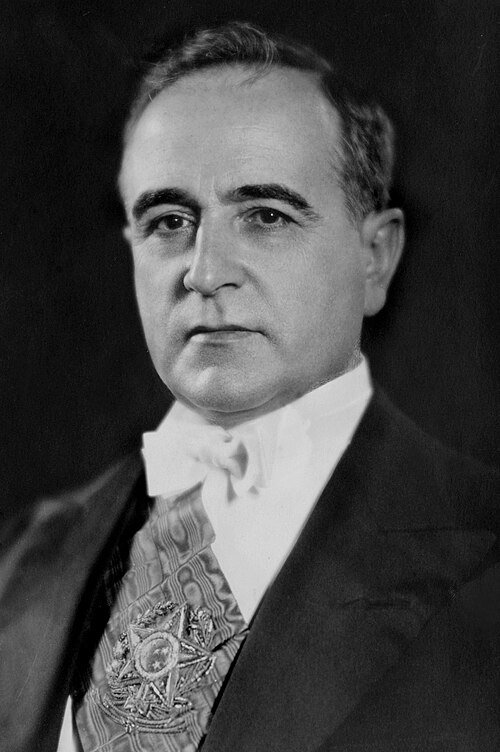
 Who is Getúlio Vargas?
Getúlio Dornelles Vargas, often referred to simply as Getúlio Vargas, was a towering figure in twentieth-century Brazil. His long and controversial political career saw him serve as the nation’s president for two distinct periods: from 1930 to 1945, and again briefly in 1951. Born on April 19, 1882, in São Borja, Rio Grande do Sul, Vargas came of age during a time of intense political upheaval and social change.
Vargas’s father, Manuel Do Nascimento Vargas, was a coffee farmer, while his mother, Cândida Francisca Dornelles, hailed from a prominent family in the region. He grew up amidst the tumultuous politics of southern Brazil, where disputes over land rights and federal control were frequent. After completing his law degree at the Federal University of Rio Grande Do Sul in 1907, Vargas began practicing law in Porto Alegre.
Vargas’s political career took off when he became involved with the Republican Party of Rio Grande do Sul. By the early 1920s, he had risen through the ranks to become a state representative and eventually governor. His ability to navigate Brazil’s complex regional politics and his populist appeal helped him build a broad coalition that propelled him into national prominence.
In 1930, Vargas led a successful revolution against President Washington Luís and took control of the government as provisional president. He then established himself as an authoritarian leader, centralizing power in the executive branch and suppressing opposition. Despite initial resistance from elites, his policies aimed at modernizing Brazil’s economy and state institutions found support among working-class Brazilians.
During his tenure, Vargas enacted significant labor reforms, including the establishment of a minimum wage and workers’ rights to form unions. He also oversaw the industrialization of Brazil through protective tariffs on imported goods and the creation of large state-owned enterprises such as the Companhia Vale do Rio Doce (CVRD) in 1942. However, his strong-arm tactics and concentration of power led to increasing opposition from both leftists and conservatives.
After World War II, with growing discontent over Vargas’s authoritarian rule, he was forced into a brief retirement but returned to the political arena in 1950 when he ran as a candidate for the Brazilian Labour Party. He won by a landslide, becoming Brazil’s first democratically elected president since 1937.
Tragically, Vargas’s second term was marked by economic instability and continued unrest. Facing mounting pressure from military leaders who accused him of failing to address corruption and inefficiency in the government, he committed suicide on August 24, 1954, shooting himself with his pistol after a failed coup attempt.
Despite controversies over human rights abuses and authoritarianism, Vargas’s legacy includes significant social reforms that contributed to the development of Brazil’s modern industrial economy. His influence is still felt today in Brazilian politics and society, making him one of the most studied figures in Latin American history.
Common Questions
What were some key accomplishments of Getúlio Vargas?
Among his key achievements are labor reforms that established a minimum wage and workers' rights to unionize. He also initiated Brazil's industrialization by promoting protective tariffs and founding state-owned enterprises.
How did Getúlio Vargas come into power in 1930?
Vargas led a successful revolution against President Washington Luís, taking control of the government as provisional president. His coalition built on regional support and populist appeal enabled him to solidify his hold over Brazil.
What were some criticisms of Getúlio Vargas's rule?
Critics accused Vargas of authoritarianism, human rights abuses, and suppression of political opposition during his long tenure in power from 1930 to 1945.
How did Getúlio Vargas die?
Facing pressure from military leaders over alleged corruption and inefficiency, Vargas committed suicide on August 24, 1954, by shooting himself with his pistol after a failed coup attempt.