 Germany
 Who is Albert Einstein?
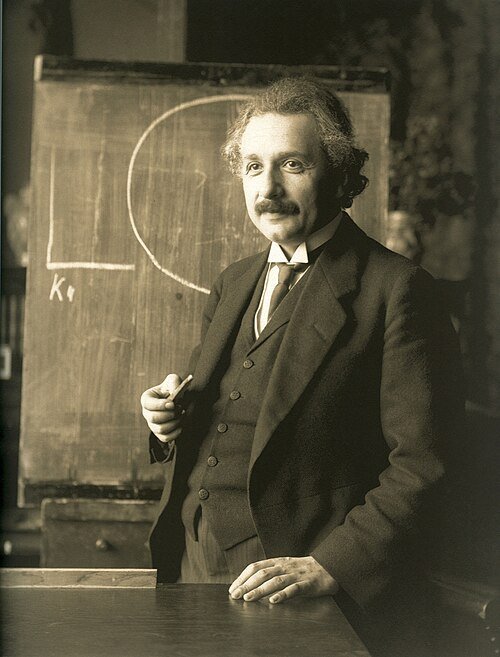
Albert Einstein, the preeminent physicist of the twentieth century, forever altered our understanding of space, time, and gravity with his groundbreaking theories. Born on March 14, 1879, in Ulm, Germany, to Hermann and Pauline Einstein, Albert’s early life was marked by a unique intellectual curiosity that would define his career.
As the son of a salesman, young Albert showed little interest in conventional education but developed an intense fascination with mathematics and physics. Despite struggling in school due to a speech impediment, he found solace in thought experiments that would later lead him to revolutionary insights about nature’s fundamental laws. After completing his secondary education at the Aarau Cantonal School, Einstein enrolled at the Swiss Federal Polytechnic School in Zurich.
His career took off when Einstein published four groundbreaking papers in 1905, often referred to as his “miracle year.” These included his special theory of relativity and the famous equation E=mc². Later, he expanded on these ideas with his general theory of relativity in 1915, which introduced a new understanding of gravity as a curvature of spacetime caused by mass and energy.
Throughout his career, Einstein was nominated for the Nobel Prize in Physics multiple times before being awarded it in 1921 for explaining the photoelectric effect. His work not only earned him international acclaim but also made him a symbol of scientific genius and humanistic philosophy.
Einstein’s personal life included two marriages: first to Mileva Marić, with whom he had two sons—Hans Albert Einstein and Eduard—and one daughter named Lieserl whose fate remains uncertain. After the dissolution of his marriage to Mileva in 1919, Einstein married Elsa Löwenthal in 1919.
His legacy extends far beyond his scientific achievements; Einstein was also a passionate advocate for pacifism and civil liberties. He spent his later years at Princeton University until his death on April 18, 1955, due to an abdominal aortic aneurysm.
Common Questions
What were the key achievements of Albert Einstein?
Albert Einstein is best known for his theory of relativity and the equation E=mc². He also received the Nobel Prize in Physics in 1921.
When did Albert Einstein publish his famous papers on special relativity?
Einstein published four groundbreaking papers in 1905, including his special theory of relativity.
Did Albert Einstein have any children?
Yes, Albert Einstein had two sons with his first wife Mileva Marić: Hans Albert and Eduard. The fate of their daughter Lieserl remains uncertain.
Why did Albert Einstein receive the Nobel Prize in Physics?
Einstein received the Nobel Prize in Physics in 1921 for explaining the photoelectric effect, which laid the foundation for quantum theory.