 Austria
 Who is Adolf Hitler?
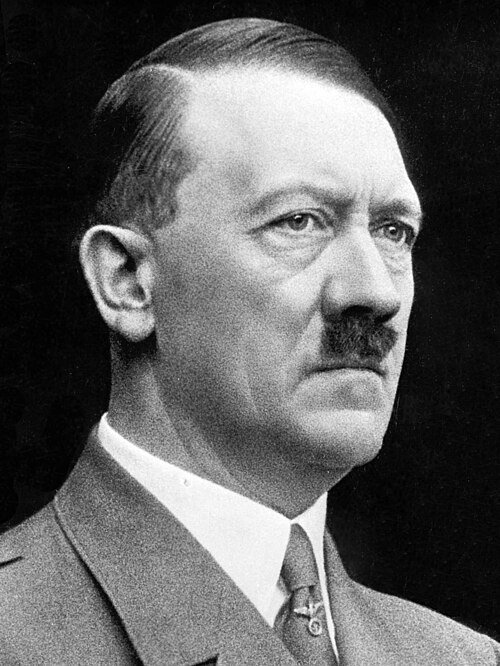
Adolf Hitler, the architect of one of the most devastating periods in human history, ruled Nazi Germany from January 30, 1933, until his suicide on April 30, 1945. Born into a modest family in Braunau am Inn, Austria-Hungary (now Austria), on April 20, 1889, Hitler’s early life was marked by the death of his mother when he was only 18 and the estrangement from his father.
Hitler initially sought to become an artist but struggled to find success. After moving to Vienna in 1907, where his artistic aspirations were met with rejection, Hitler returned to Linz before eventually making his way to Munich, Germany, where he became involved in politics and joined the German Workers’ Party (DAP) in September 1919.
His political career took off when he rose through the ranks of the DAP, which later became known as the Nazi Party. Hitler’s oratory skills and ability to mobilize support among disenfranchised Germans after World War I led him to become the party’s leader in 1920. His attempt at a coup d’état, known as the Beer Hall Putsch, in Munich on November 8-9, 1923, failed but established his reputation and landed him in prison where he wrote Mein Kampf.
After his release from Landsberg Prison in December 1924, Hitler continued to build the Nazi Party through rallies and propaganda. His political ascent culminated with his appointment as Chancellor of Germany on January 30, 1933, when he began consolidating power, transforming Germany into a totalitarian state. By August 2, 1934, upon President Paul von Hindenburg’s death, Hitler assumed the role of Führer und Reichskanzler (Leader and Chancellor), marking his absolute control over both political and military spheres.
Hitler’s personal life was tumultuous; he married Eva Braun in April 1945, shortly before their joint suicide as Soviet troops approached Berlin. His only sibling to survive childhood was Paula Hitler, who outlived him by several decades.
The legacy of Adolf Hitler is indelibly tied to the Holocaust and World War II. Approximately six million Jews were systematically murdered alongside millions of other victims including Romani people, disabled individuals, homosexuals, and political dissidents. His policies led to widespread destruction across Europe and a global conflict that left an estimated 60-85 million dead.
Common Questions
What was Hitler's early life like?
Born in Austria in 1889, Hitler moved to Vienna where he struggled as an aspiring artist before joining the German Workers' Party.
How did Hitler become Chancellor of Germany?
Hitler joined the Nazi party and rose through its ranks. His political skills and ability to mobilize support led him to be appointed Chancellor on January 30, 1933.
What was the Beer Hall Putsch?
It was a failed coup attempt in Munich on November 8-9, 1923. Despite its failure, it established Hitler's reputation and led to his imprisonment where he wrote Mein Kampf.
Did Hitler have any siblings?
Yes, Adolf had six siblings but only Paula survived into adulthood.
What is the legacy of Adolf Hitler?
Hitler’s policies during World War II resulted in the Holocaust and massive destruction across Europe. His actions led to an estimated 60-85 million deaths globally.