 Ireland
 Who is William Butler Yeats?
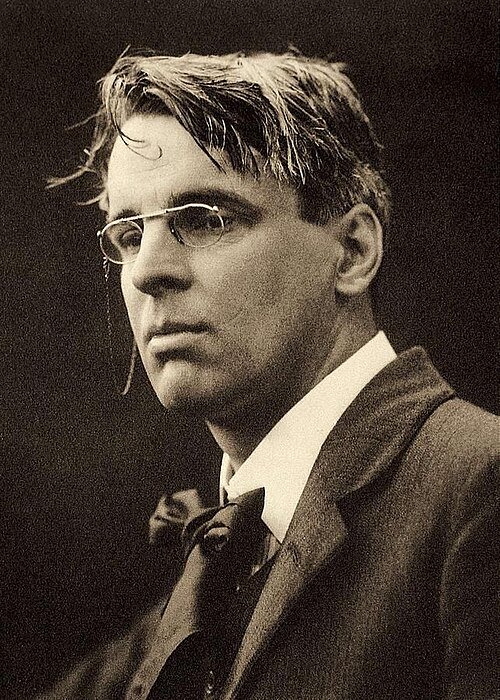
W.B. Yeats, whose full name is William Butler Yeats, remains one of Ireland’s most celebrated poets and dramatists. Born on June 13, 1865, in Dublin, Yeats left an indelible mark on the literary world through his evocative poetry and plays that capture the spirit of Irish nationalism.
Yeats was born into a family rich with artistic heritage; his father, John Butler Yeats, was a barrister turned artist, while his mother, Susan Pollexfen, came from a wealthy merchant background. The family moved to London when he was two years old but returned to Dublin in 1880. Yeats’s early exposure to Irish folklore and the mystical elements of Celtic culture heavily influenced his later work.
Yeats began his career as a writer while still in his teens, contributing articles to The Dublin University Review. He became involved with the Irish National Theatre Society (now known as the Abbey Theatre) where he worked closely with Lady Augusta Gregory and John Millington Synge. His first published collection of poetry was The Wanderings of Oisin in 1889, followed by numerous plays and volumes of poetry that explored themes of love, Irish mythology, and political upheaval.
In his personal life, Yeats’s relationships were as complex as the poetry he wrote. He was deeply enamored with Maud Gonne, a prominent figure in the Irish nationalist movement who inspired much of his work but never married him. His marriage to Georgie Hyde-Lees in 1917 introduced him to spiritualism and automatic writing techniques that influenced later works like A Vision. The couple had two children: Anne Yeats, an artist, and Michael, a filmmaker.
Yeats’s influence extended beyond literature into political realms as he served as a senator for the Irish Free State from 1922 to 1928. His contributions were recognized with the Nobel Prize in Literature in 1923 ‘for his always inspired poetry, which in a highly artistic form gives expression to the spirit of a whole nation.’ He died on January 28, 1939, leaving behind a legacy that continues to inspire and challenge readers around the world.
Common Questions
What was W.B. Yeats's early life like?
Born in Dublin, Yeats moved with his family to London when he was two years old but returned to Ireland at age fifteen.
Who were some of the key figures that influenced W.B. Yeats?
Yeats was heavily influenced by Irish folklore and Celtic mysticism. He also worked closely with Lady Augusta Gregory and John Millington Synge in the Irish National Theatre Society.
What are some of W.B. Yeats's notable works?
The Wanderings of Oisin (1889), Cathleen ni Houlihan, The Countess Cathleen, and A Vision.
How did W.B. Yeats's marriage to Georgie Hyde-Lees impact his work?
Yeats became interested in spiritualism after marrying Georgie, which influenced the techniques he used in writing, such as automatic writing.
What was W.B. Yeats's involvement with Irish politics?
From 1922 to 1928, Yeats served as a senator for the Irish Free State.