 Russia
 Who is Boris Yeltsin?
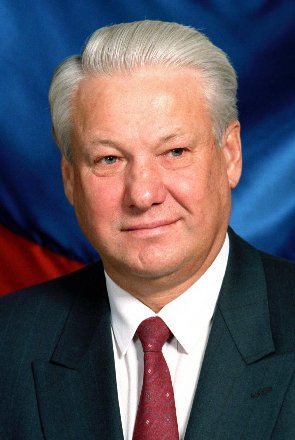
Boris Nikolayevich Yeltsin was a towering figure in Russian politics whose career spanned four decades. Born on February 1, 1931, in Butka village, Sverdlovsk Oblast, Yeltsin grew up to become the first democratically elected President of Russia and played a crucial role in the dissolution of the Soviet Union.
Yeltsin’s early life was marked by the hardships of rural Siberia. His father, Nikolai Ignatievich Yeltsin, worked as a construction foreman, while his mother, Claudia Vasilievna Jeltsina, was a homemaker. Despite facing numerous obstacles, Yeltsin excelled in school and pursued higher education at Ural State Technical University, where he earned a degree in construction engineering.
Yeltsin began his career as an engineer but soon turned to politics. His rise through the ranks of the Communist Party was rapid, with significant roles in regional governance leading up to Moscow. In 1987, Yeltsin became the First Secretary of the CPSU Moscow City Committee and later a full member of the Politburo in 1986.
By the late 1980s, Yeltsin had become disillusioned with the Soviet system under Mikhail Gorbachev’s leadership. He resigned from the Communist Party in May 1987 and was expelled from the CPSU in July 1987 after criticizing Gorbachev publicly. However, this bold move did not hinder his political ambitions; instead, it propelled him to national prominence.
In June 1991, Yeltsin won the presidential election in Russia’s first direct election for president, marking a historic shift towards democracy and market reforms. As President, he faced numerous challenges, including the August Coup of 1991 when hardline Communists attempted to overthrow Gorbachev and restore Soviet power. Yeltsin rallied support against the coup, which ultimately led to the dissolution of the Soviet Union in December 1991.
Yeltsin’s personal life was also marked by significant milestones. He married Naina Iosifovna Gelfman in 1953, and they had two daughters together: Tatyana Yumasheva and Elena Yeltsina. Despite his political prominence, Yeltsin maintained a close relationship with his family, often speaking of their support as crucial to his success.
Boris Yeltsin’s legacy is complex but undeniably significant in shaping modern Russia. His tenure as president was marked by the collapse of the Soviet Union and the early years of post-Soviet Russia, including economic turmoil and political instability. He passed away on April 23, 2007, due to heart failure at his home outside Moscow.
Common Questions
What was Boris Yeltsin's role in the dissolution of the Soviet Union?
Boris Yeltsin played a key role in the dissolution of the Soviet Union by resisting the August Coup in 1991, which ultimately led to the collapse of the Soviet system.
When did Boris Yeltsin become President of Russia?
Yeltsin was elected as the first president of post-Soviet Russia in June 1991, marking a historic shift towards democracy and market reforms.
What were some of Boris Yeltsin's key achievements?
Boris Yeltsin led Russia through its transition from communism to democracy, overseeing the collapse of the Soviet Union in December 1991. He also established a new constitution and introduced market reforms.
Did Boris Yeltsin have any siblings?
Boris Yeltsin had one brother named Mikhail Yeltsin, who was also an engineer like their father Nikolai Ignatievich Yeltsin.
What were some of the challenges Boris Yeltsin faced as President of Russia?
Yeltsin faced significant economic turmoil and political instability during his presidency. Key challenges included managing inflation, privatizing state assets, and dealing with separatist conflicts in Chechnya.
How did Boris Yeltsin's family support him?
Boris Yeltsin often spoke of the support from his wife Naina and daughters as crucial to his political career. His close-knit family was a constant source of strength during turbulent times.