 France
 Who is Jean-Paul Sartre?
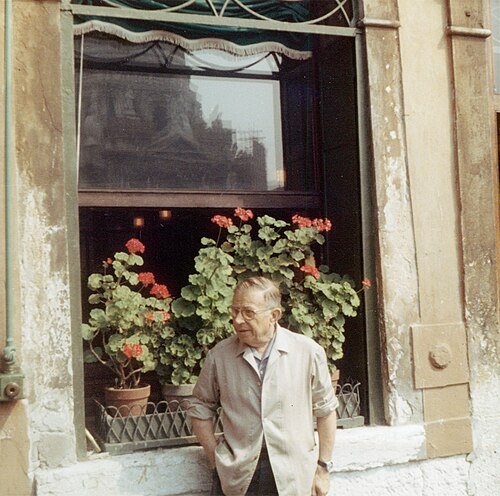
Renowned as one of the most influential philosophers and writers of the twentieth century, Jean-Paul Charles Aymard Sartre (June 21, 1905 – April 15, 1980) left an indelible mark on Western philosophy and literature. Born in Paris to a family with roots in military service and academia, his childhood was marked by the absence of his father, who died when Sartre was only fifteen months old.
His early education at prestigious institutions like the Lycée Louis-le-Grand and the École Normale Supérieure, where he met lifelong intellectual partner Simone de Beauvoir, laid a foundation for his later contributions to philosophy. It was here that Sartre began to formulate ideas that would become central to existentialism.
The rise of Sartre’s career is marked by several key achievements and milestones. In 1938, he published Nausea, a novel that introduced many readers to the themes of existential angst and freedom. His philosophical treatises, such as Being and Nothingness (1943), solidified his reputation as a leading thinker in existentialism. Sartre’s plays and screenplays also garnered him recognition; he was nominated for an Oscar in 1962 for Best Story and Screenplay Adaptation of the Year, though the nomination did not result in a win.
Throughout his life, Sartre maintained complex relationships with several women who were instrumental to his work. The most significant among them was Simone de Beauvoir, whom he lived with from 1929 until his death, despite maintaining multiple romantic and sexual relationships over the years. De Beauvoir was not only a partner but also an influential thinker in her own right.
Jean-Paul Sartre’s legacy is vast and enduring. He passed away on April 15, 1980, due to edema at the age of seventy-four. His work continues to influence philosophy, literature, and activism around the world. The existentialist movement he helped to define remains a touchstone for discussions about human freedom and responsibility.
Common Questions
What was Jean-Paul Sartre's childhood like?
Sartre's childhood was marked by his father's early death, leaving him to be raised largely by his mother. He attended prominent schools in Paris that would shape his intellectual development.
When did Sartre publish 'Being and Nothingness'?
Jean-Paul Sartre published Being and Nothingness, a seminal work of existential philosophy, in 1943.
What was the significance of Simone de Beauvoir in Sartre's life?
Simone de Beauvoir lived with Jean-Paul Sartre from 1929 until his death. She was not only a partner but also an influential thinker and writer, contributing significantly to existentialist thought.
Did Sartre win any awards for his work in literature?
Jean-Paul Sartre did not win the Nobel Prize in Literature, despite being nominated several times. However, he was recognized with an Oscar nomination in 1962 for Best Story and Screenplay Adaptation of the Year.
How does Jean-Paul Sartre's work impact contemporary philosophy?
Sartre's contributions to existentialism continue to influence contemporary philosophers who explore themes such as freedom, authenticity, and the human condition.