 Cuba
Cuba Who is Max Ernst?
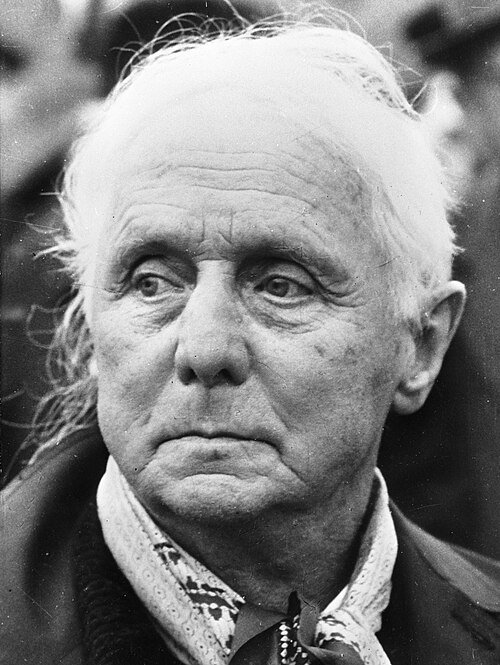
Max Ernst (born Maximilian Maria Ernst on April 2, 1891, died April 1, 1976), was a German artist who became one of the most prominent figures in the Surrealist art movement. A polymath, he was also an author and designer, among other pursuits. Ernst’s life and work embodied the spirit of avant-garde experimentation that defined early twentieth-century European culture.
Ernst was born in Brühl, Germany, to a strict Protestant family. His father Philipp Ernst was a teacher who instilled in Max a love for nature and art through his own botanical illustrations and woodcarvings. Despite this grounding in tradition, young Max rebelled against the constraints of his upbringing by exploring the realms of imagination and fantasy that would later define his artistic output.
Ernst’s journey to prominence began at the University of Bonn where he studied philosophy and psychiatry, subjects that deeply influenced his work. In 1920, Ernst co-founded the Cologne Dada group, which was a precursor to Surrealism, marking his entry into the avant-garde art scene. He moved to Paris in 1922, where his innovative techniques such as frottage and grattage—techniques he developed to evoke subconscious imagery—earned him acclaim.
Throughout his career, Ernst had a series of significant relationships that influenced both his personal life and artistic output. He was married three times: first to Luise Straus-Ernst in 1927 (divorced in 1930), then to the American art collector Peggy Guggenheim from 1941 to 1945, and finally to Dorothea Tanning until his death. Ernst also had romantic liaisons with Leonora Carrington and Meret Oppenheim, both influential figures in their own right within Surrealism.
Ernst’s work spanned a variety of media including painting, sculpture, collage, and literature. His most famous works include The Elephant Celebes (1921), which used frottage to create an unsettling scene, and the sculpture Sculpture with Sound. In 1941, he married Peggy Guggenheim, who supported his work financially and introduced him to a broader American audience. Ernst’s legacy is marked by his contributions to Surrealism and his exploration of the human psyche through abstract forms.
Max Ernst passed away on April 1, 1976, in Paris at the age of 84. His enduring impact lies in how he bridged the gap between Dada and Surrealist movements while pushing boundaries with new artistic techniques that inspired generations to come.
Common Questions
What were Max Ernst's early influences?
Ernst was influenced by his father Philipp, a teacher who encouraged his interest in nature and art through botanical illustrations. He also studied philosophy and psychiatry at the University of Bonn.
What techniques did Max Ernst develop?
Ernst developed innovative artistic techniques such as frottage and grattage, which involved rubbing graphite or paint over textured surfaces to create abstract imagery. These techniques allowed him to explore the subconscious mind.
Who were some of Max Ernst's romantic partners?
Max Ernst had relationships with several influential figures including Leonora Carrington and Meret Oppenheim, as well as being married three times: Luise Straus-Ernst, Peggy Guggenheim, and Dorothea Tanning.
What is Max Ernst's most famous work?
One of Ernst's most famous works is the painting The Elephant Celebes (1921), which uses frottage to create an unsettling and surreal scene.
How did Peggy Guggenheim support Max Ernst?
Peggy Guggenheim, an American art collector, supported Ernst financially after their marriage in 1941. She also introduced him to a wider audience in the United States.