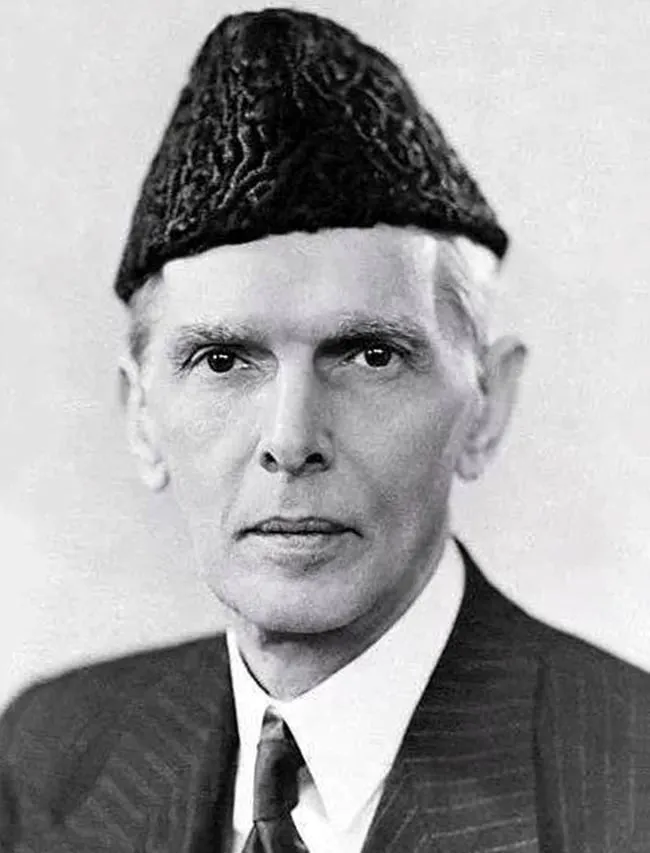
Mohammad Ali Jinnah Profile & Biography

Mohammad Ali Jinnah

Born: December 25, 1876
Died: September 11, 1948
Mohammad Ali Jinnah, the founder of Pakistan, was a prominent lawyer and politician who led the All India Muslim League to demand a separate nation for Muslims

Who is Mohammad Ali Jinnah?

Mohammad Ali Jinnah, also known as Quaid-e-Azam (Great Leader), is one of the most significant figures in modern South Asian history. Born on December 25, 1876, and passing away on September 11, 1948, his life spanned a tumultuous era that saw profound changes in the subcontinent’s political landscape.

Jinnah was born to Jinnahbhai Poonja and Mitthibai Jinnahbhai in Karachi. His father was a prosperous merchant who moved the family to Bombay when Mohammad was twelve, setting him on an educational path that would shape his future career as a lawyer. After completing high school in London at the age of sixteen, he returned to India and began practicing law in Bombay.

Over the course of his legal career, Jinnah’s reputation grew, and he became involved in politics through the Indian National Congress. However, by 1913, he had become disillusioned with its approach towards Muslims’ concerns and joined the All India Muslim League, where he quickly rose to prominence as a leader advocating for separate electorates and communal representation.

By the late 1920s, Jinnah was seen as an influential voice in Indian politics. He distanced himself from Congress’s leadership and became the president of the All India Muslim League in 1934, leading it to demand a separate nation for Muslims in British India. His most significant achievement came in 1947 when he negotiated with Lord Mountbatten, the last Viceroy of India, and succeeded in establishing Pakistan as an independent state on August 14.

On a personal note, Jinnah married Emibai Jinnah and later Rattanbai Jinnah. He had one daughter, Dina Wadia, who was born out of his second marriage to Ruttie Jhabvala in 1919. His sister Fatima Jinnah played a significant role in politics after his death.

Despite the challenges posed by tuberculosis, which ultimately claimed his life on September 11, 1948, Mohammad Ali Jinnah left an indelible mark on history as the founding father of Pakistan. His legacy continues to influence political thought and national identity in South Asia.

Common Questions

When did Mohammad Ali Jinnah become involved with the All India Muslim League?
Mohammad Ali Jinnah joined the All India Muslim League in 1913 after becoming disillusioned with the Indian National Congress's approach towards Muslims' concerns.
What were some of Mohammad Ali Jinnah's significant political achievements?
Among his key achievements, Jinnah negotiated Pakistan’s establishment as an independent state on August 14, 1947. He was also the president of the All India Muslim League starting in 1934.
Who were Mohammad Ali Jinnah's family members?
Jinnah's mother was Mitthibai Jinnahbhai and his father was Jinnahbhai Poonja. He had a sister, Fatima Jinnah, and a daughter named Dina Wadia from his second marriage to Ruttie Jhabvala.
When did Mohammad Ali Jinnah pass away?
Mohammad Ali Jinnah passed away on September 11, 1948, after battling tuberculosis.

People Also Viewed