Russia Who is Raisa Gorbacheva?
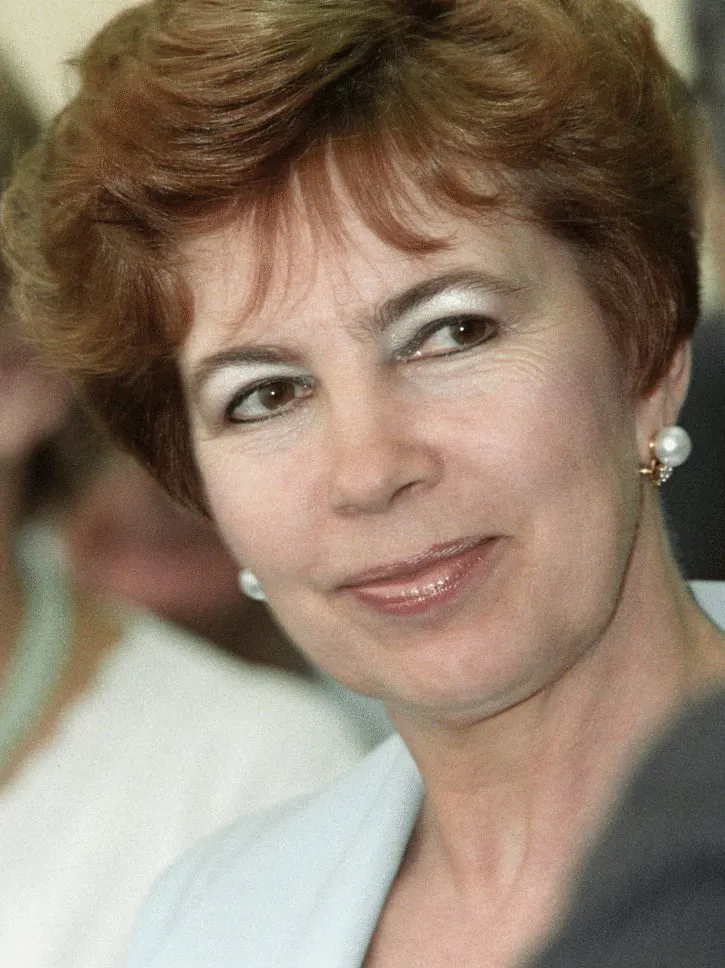
Raisa Maximovna Gorbacheva (January 5, 1932 – September 20, 1999) was not merely a wife to one of history’s most influential figures but an intellectual and political force in her own right. Her life spanned the tumultuous decades of Soviet communism’s decline and fall.
Born into a modest family in Kujbyshev (now Samara), Raisa Maximovna was raised by parents Alexandra Titarenko and Maxim Titarenko. She came from an academic background, with her father being a history professor. Her early years were marked by the upheavals of World War II, which left indelible marks on Soviet society.
After completing high school, Raisa enrolled at Moscow University’s Department of Philosophy and later pursued further education at Moscow Pedagogical State University, where she earned a PhD in sociology. Her academic pursuits were not confined to the classroom; she actively participated in political discussions that would shape her future role in Soviet politics.
Her career trajectory gained momentum with her marriage to Mikhail Gorbachev in 1953. As his wife and partner, Raisa played a significant behind-the-scenes role during his ascension through the Communist Party hierarchy. She became an influential figure within the political elite, known for her intelligence and progressive views. When Mikhail was elected General Secretary of the Soviet Union’s Communist Party in 1985, Raisa’s influence extended beyond domestic politics to international diplomacy.
Together with Mikhail, Raisa championed policies such as glasnost (openness) and perestroika (restructuring), which aimed at democratizing Soviet society. She was instrumental in advocating for social reforms, particularly in the areas of women’s rights and education. Her role extended to international forums where she promoted dialogue between East and West.
Raisa’s personal life was closely intertwined with her public persona. They had a daughter, Irina Virganskaya, who followed in their parents’ footsteps by becoming an academic herself. Despite the intense scrutiny of Soviet politics and the media attention that accompanied it, Raisa maintained a strong family bond.
The latter part of Raisa’s life was marked by her husband’s political reforms and the dissolution of the Soviet Union in 1991. After Mikhail stepped down as President, they moved to Moscow where she continued her work in academia and social advocacy until her health began to deteriorate due to leukemia.
Raisa Maximovna Gorbacheva’s legacy is one of a trailblazing intellectual who used her platform to advocate for progressive change. Her death on September 20, 1999, was mourned by many as the end of an era in Soviet and Russian history.