 United States
 Who is Robert Oppenheimer?
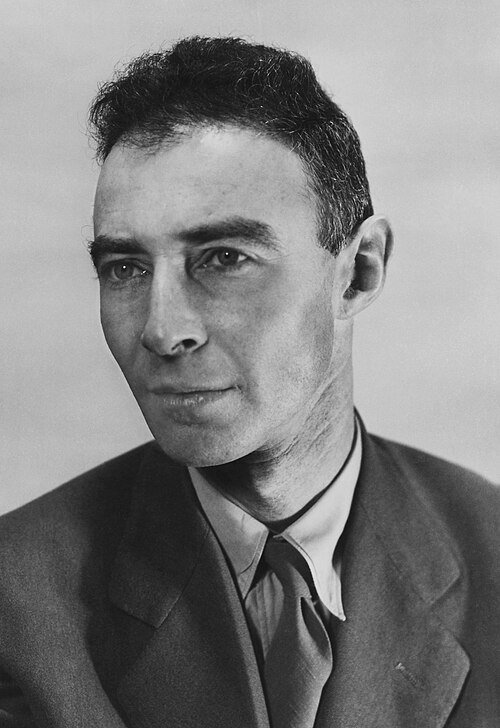
J. Robert Oppenheimer was a towering figure in the history of science, whose life spanned one of the most transformative periods in human civilization. As a physicist and scientific director of the Manhattan Project during World War II, he played a central role in developing the atomic bomb, an achievement that would forever alter the course of global politics.
Oppenheimer was born Julius Robert Oppenheimer on April 22, 1904, in New York City to a prominent family. His father, Julius S. Oppenheimer, was a successful textile importer, and his mother, Ella Friedman Oppenheimer, came from an affluent Jewish family with deep roots in the garment industry. Raised in an intellectually vibrant household, young Robert developed a keen interest in physics early on.
After graduating from the Ethical Culture School, he enrolled at Harvard University where he excelled academically but struggled to find his passion until discovering theoretical physics during his senior year. Inspired by Niels Bohr’s lectures and later attending Jesus College, Cambridge, Oppenheimer then moved to Germany in 1926 to study under Max Born at the University of Göttingen.
Upon returning to America, he joined the faculty at Berkeley and Caltech, where his work on quantum theory and theoretical physics gained international recognition. In 1943, Oppenheimer was appointed as the scientific director of the Manhattan Project, leading a team of scientists tasked with developing the first atomic bomb. Despite facing significant ethical dilemmas about the use of such destructive power, he continued to contribute crucial insights that led to the successful creation of these weapons.
His personal life was marked by marriages and family: he married Katherine Puening in 1929 and had two children, Peter and Toni. He also had a brother, Frank Oppenheimer, who followed him into a career in science but focused on biology and education.
After the war, Oppenheimer became a vocal advocate for international arms control and nuclear non-proliferation. However, his earlier involvement with leftist politics and alleged sympathies during the McCarthy era led to a controversial hearing by the Atomic Energy Commission in 1954 that stripped him of his security clearance. Despite this setback, he remained active in scientific research and education until his death from throat cancer on February 18, 1967.
Oppenheimer’s legacy is multifaceted: while revered as a brilliant physicist whose work transformed modern warfare, his ethical concerns about the consequences of his creations have made him a complex figure in history. His contributions to science and public discourse continue to be celebrated for their profound impact on both fields.
Common Questions
What was J. Robert Oppenheimer's role during World War II?
Oppenheimer served as the scientific director of the Manhattan Project, leading a team tasked with developing the first atomic bomb.
Where did Oppenheimer study and earn his degrees?
He studied at Harvard University and Jesus College in Cambridge. He completed his doctoral studies under Max Born at the University of Göttingen.
What were some of J. Robert Oppenheimer's major scientific contributions?
Oppenheimer made significant contributions to theoretical physics, including work on quantum theory and nuclear physics, but is best known for his leadership during the Manhattan Project.
Why did J. Robert Oppenheimer face controversy after World War II?
He faced scrutiny due to past associations with leftist politics and alleged communist sympathies during the McCarthy era, leading to a hearing by the Atomic Energy Commission that revoked his security clearance.
What was J. Robert Oppenheimer's stance on nuclear weapons after their use in World War II?
Oppenheimer became an advocate for international arms control and non-proliferation of nuclear weapons, expressing ethical concerns about their destructive potential.