 United Kingdom
 Who is William Makepeace Thackeray?
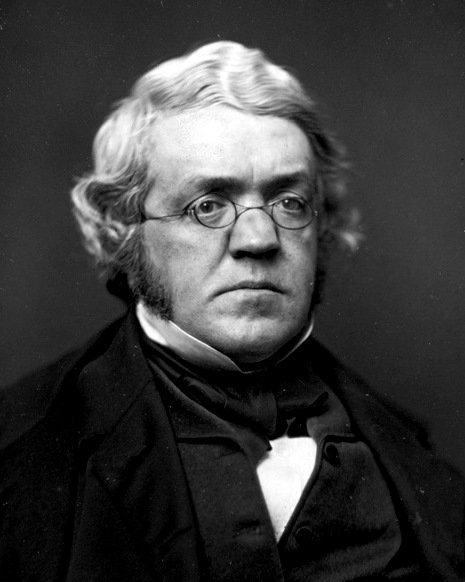
William Makepeace Thackeray (July 18, 1811 – December 24, 1863) was a pioneering Victorian-era writer whose satirical novels captured the social complexities of his time. His most celebrated work, Vanity Fair, is a scathing critique of upper-class British society.
Born in Calcutta to an affluent family, Thackeray’s father passed away when he was just six months old, leaving him and his mother to return to England where they were initially supported by the East India Company. His early years were marked by a privileged education at Trinity College, Cambridge, though financial difficulties later forced him to abandon his studies.
Thackeray’s literary career began in earnest after he returned from Germany with an inheritance that allowed him to focus on writing full-time. In 1840, he published the first of many illustrated satirical articles under various pen names such as George Fitz-Boodle, which set the tone for his distinctive style. His breakthrough came in 1847 with the serialized publication of Vanity Fair: A Novel Without a Hero. This biting social commentary earned him widespread acclaim and cemented his reputation as one of the foremost novelists of his era.
His personal life was marked by several significant relationships. In 1836, he married Isabella Gethen Creagh Shawe, with whom he had three daughters: Anne Isabella Thackeray Ritchie, Harriet Stephen, and Jane Thackeray. Despite a turbulent marriage marred by his infidelity and her mental health struggles, Thackeray remained devoted to his family throughout.
Thackeray’s legacy is one of unflinching social critique and literary innovation. His works continue to be studied for their sharp wit and profound understanding of human nature. He died at the age of 52 in 1863, leaving behind a body of work that remains relevant today.
Common Questions
What was William Makepeace Thackeray's early life like?
Thackeray was born to an affluent family in Calcutta. After his father's death when he was just six months old, the family moved back to England and faced financial difficulties.
How did Thackeray start his career as a writer?
After inheriting money from his German guardian, Thackeray began publishing satirical articles under various pen names. His breakthrough came in 1847 with the publication of 'Vanity Fair'.
What are some of William Makepeace Thackeray's most famous works?
Vanity Fair, Pendennis, and The Luck of Barry Lyndon are among his most celebrated novels.
How did Thackeray handle the personal challenges in his life?
Despite a difficult marriage marked by infidelity on both sides, Thackeray remained devoted to his wife Isabella and their three daughters. He supported them throughout their lives.
What is William Makepeace Thackeray's legacy?
Thackeray is remembered for his satirical novels that offer a sharp critique of Victorian society. His works continue to be studied today for their wit and insight into human nature.