 United Kingdom
 Who is Alfred Hitchcock?
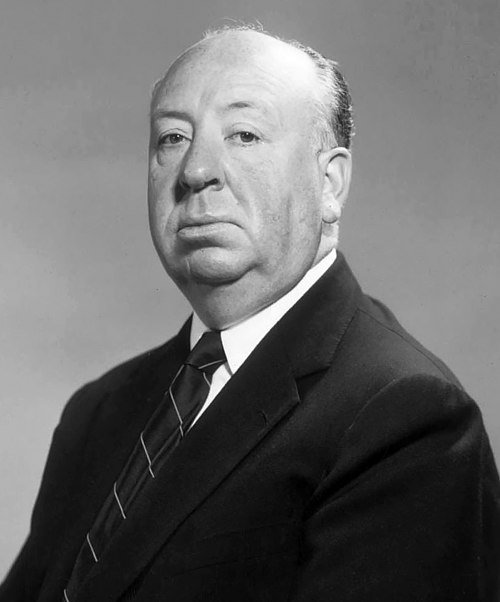
Alfred Joseph Hitchcock (August 13, 1899 – April 29, 1980) was a British film director, producer, screenwriter, editor, and cinematographer, whose influence on cinema is unparalleled. Known as the Master of Suspense, he pioneered techniques that are still studied in film schools today.
Born to Irish immigrant parents in London’s Leytonstone district, Hitchcock grew up in a strict Catholic household under his father’s stern discipline. He attended Salesian College and later Tower Hamlets College where he developed an early interest in photography and filmmaking. After leaving school at the age of sixteen, Hitchcock worked as a technical clerk for W.T. Fry Ltd., a cable manufacturing company.
In 1920, Hitchcock joined the London branch of American film production company Famous Players-Lasky (later Paramount Pictures) as a title card designer and eventually became an assistant director in their British unit. His big break came with the silent thriller The Pleasure Garden in 1925. Over the next decade, Hitchcock honed his skills on films like The Lodger (1927) and The Man Who Knew Too Much (1934).
Hitchcock’s career ascended with his move to Hollywood in 1939. His first American film, Rebecca, won the Academy Award for Best Picture in 1940. He continued to deliver classics like Suspicion (1941), Shadow of a Doubt (1943), and Notorious (1946). His most famous films include the psychological thriller Psycho (1960) and the surreal, visually stunning Vertigo (1958).
Hitchcock’s personal life was closely intertwined with his professional career. He married Alma Reville in 1926; she served as a scriptwriter and editor throughout their marriage. Their daughter Pat Hitchcock also became involved in the film industry, often appearing in cameo roles or serving as an assistant director.
Alfred Hitchcock passed away on April 29, 1980, due to kidney failure at his Bel Air home in Los Angeles. He left behind a legacy that includes over fifty feature films and a television series that ran for ten seasons. His contributions to the art of filmmaking continue to be celebrated and studied worldwide.
Common Questions
When was Alfred Hitchcock born?
Alfred Joseph Hitchcock was born on August 13, 1899.
What were some early influences in Hitchcock's life?
Growing up in a strict Catholic household under his father’s discipline and developing an interest in photography and filmmaking during his studies at Salesian College influenced Hitchcock's early years.
Which films are considered classics by Alfred Hitchcock?
Psycho (1960) and Vertigo (1958) are among the most famous of his films, alongside earlier works such as The 39 Steps (1935) and Rebecca.
How long was Hitchcock's marriage to Alma Reville?
Alma Reville and Alfred Hitchcock married in 1926, maintaining their partnership until his death in 1980.
What is the significance of 'Vertigo' in Hitchcock's career?
Vertigo, released in 1958, is notable for its innovative use of cinematography and visual storytelling techniques that influenced many directors who followed.