
 United States
 Who is Calvin Coolidge?
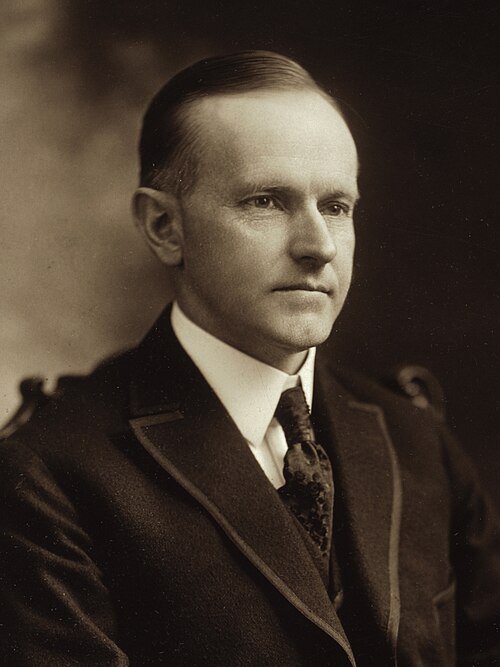
John Calvin Coolidge Jr., commonly known as Calvin Coolidge, served as the 30th President of the United States from August 2, 1923, to March 4, 1929. Born on July 4, 1872, in Plymouth Notch, Vermont, Coolidge’s life was marked by a blend of rural New England roots and political acumen.
Coolidge’s formative years were influenced significantly by his father, John Calvin Coolidge Sr., who was both a local businessman and politician. His mother, Victoria Josephine Moor, died when he was twelve, leaving a lasting impact on the young Calvin. He excelled academically at Amherst College, where he developed an interest in law.
After graduating from college, Coolidge pursued legal studies and entered politics, serving as a city councilman in Northampton, Massachusetts, before ascending to higher offices including governor of Massachusetts. His national prominence began when he was vice president under Warren G. Harding and became president upon Harding’s death.
During his presidency, Coolidge focused on reducing federal spending, balancing the budget, and lowering taxes. He signed into law significant pieces of legislation such as the Revenue Act of 1926, which reduced income tax rates. His hands-off approach to economic matters was emblematic of his philosophy of limited government intervention.
Privately, Coolidge led a modest life with his wife Grace Goodhue Coolidge and their two sons, John and Calvin Jr., who died as a teenager from blood poisoning. Despite his reserved nature, he maintained an active social calendar in Washington D.C., often hosting large receptions and dinner parties at the White House.
Coolidge’s legacy is one of fiscal conservatism and small government during a period known for prosperity. He retired to Northampton after leaving office and died on January 5, 1933, due to a myocardial infarction, just days before his 61st birthday. His tenure remains notable in American history for its economic stability and political calm.
Common Questions
What were Calvin Coolidge's early life experiences?
Coolidge was born on July 4, 1872, in Plymouth Notch, Vermont. He grew up in a modest farming community and lost his mother when he was twelve years old.
How did Calvin Coolidge become president of the United States?
Calvin Coolidge became vice president under Warren G. Harding in 1921 and assumed the presidency upon Harding's death on August 2, 1923.
What significant achievements are associated with Calvin Coolidge’s presidency?
Coolidge focused on fiscal conservatism, reducing federal spending, balancing the budget, and lowering taxes. Key legislation included the Revenue Act of 1926 which reduced income tax rates.
How did Calvin Coolidge's personal life influence his political career?
While Coolidge was known for his reserved demeanor in public, he maintained an active social calendar in Washington D.C., often hosting large receptions and dinner parties at the White House.
What is the historical impact of Calvin Coolidge’s presidency?
Coolidge's legacy includes promoting economic stability through fiscal conservatism during a period known for prosperity. His tenure also marked a time of political calm in American history.