 Germany
 Who is Hermann Hesse?
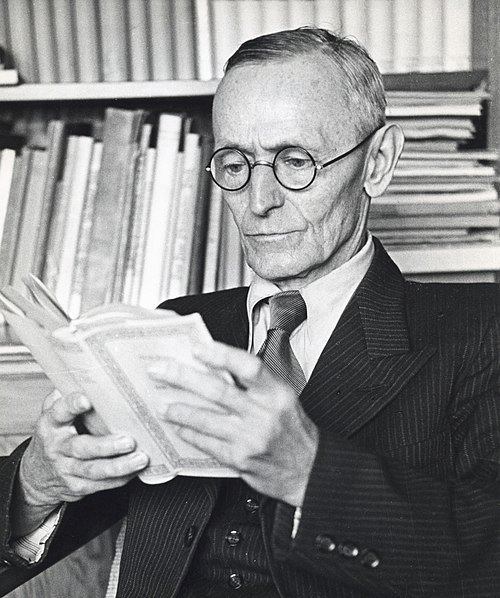
Hermann Karl Hesse (July 2, 1877 – August 9, 1962) was a German author whose literary works have left an indelible mark on modern literature. Renowned for his profound exploration of human existence through the lens of spirituality and philosophy, Hesse’s novels such as Siddhartha and Steppenwolf continue to resonate with readers around the world.
Born in Calw, Germany, into a family with strong roots in theology, Hesse’s early years were marked by an intense inner conflict. His mother Marie was a Russian emigrée from Moscow, while his father Johannes was a Protestant missionary and academic, working as a director of a German Evangelical mission school in India for many years before returning to Germany. This background deeply influenced Hesse’s worldview and spiritual inquiries.
After a turbulent period in schools due to homesickness and poor health, Hesse found solace in the city of Basel where he worked for several years as an apprentice bookseller and later as a mechanic and bookshop clerk. His literary career began gradually with his first collection of poetry Poems, published in 1906. Over the following decades, Hesse produced numerous novels including Demian (1919), which garnered him widespread recognition.
Hesse’s rise to prominence was solidified with the publication of his most famous work, Siddhartha, in 1922. The novel’s exploration of self-discovery and enlightenment through Eastern philosophy struck a chord with readers globally. His reputation as an influential thinker grew further with subsequent works like Steppenwolf (1927) and Narcissus and Goldmund (1930). In 1946, Hesse was awarded the Nobel Prize in Literature for his comprehensive and artistically unique writings which, in new forms of literature, have influenced our contemporary perception of the experiences of life.
Throughout his career, Hesse married three times. His first marriage to Maria Bernoulli lasted from 1904 until her death in 1931. In 1924, he married Ruth Wenger, with whom he had two sons: Bruno and Martin. After their divorce in 1927, Hesse married Ninon Dolbin (Ninon Hesse) who was his companion until his death.
Hesse’s personal life included a complex relationship with his family. He fathered three children but struggled to find balance between his artistic ambitions and the demands of family life. His later years were spent in Switzerland, where he lived quietly despite international acclaim. Hermann Hesse passed away on August 9, 1962, after suffering from a stroke.
His legacy is enduring, with translations of his works published in numerous languages around the world. Hesse’s profound influence extends beyond literature into philosophy and psychology, making him an important figure not just for readers but also scholars studying existentialism, spirituality, and the human condition.
Common Questions
What is Hermann Hesse best known for?
Hermann Hesse is renowned for his novel 'Siddhartha' which explores themes of spiritual enlightenment. Other notable works include 'Steppenwolf', a complex narrative on modern alienation, and 'Narcissus and Goldmund'. These books are celebrated for their philosophical depth and artistic merit.
How did Hermann Hesse's upbringing influence his work?
Hesse was born into a family with strong missionary and academic backgrounds. His father Johannes was a Protestant missionary, while his mother Marie had Russian roots. This diverse cultural heritage and the challenges of moving between different cultures during childhood deeply influenced Hesse’s introspective writings on identity and spiritual quest.
What major awards did Hermann Hesse receive?
In 1946, Hermann Hesse was awarded the Nobel Prize in Literature for his comprehensive and artistically unique writings which have significantly shaped contemporary perceptions of life experiences. This recognition came after decades of literary contributions that explored existential themes.
How many children did Hermann Hesse have?
Hermann Hesse had three sons: Bruno, Martin, and Heiner. His complex personal relationships with the mothers of these children reflect his own struggles with family life alongside his career as an artist.
What were some key themes in Hermann Hesse's writing?
Key themes in Hesse's work include spiritual quest and self-discovery, particularly influenced by Eastern philosophy. His novels often delve into the human condition, exploring alienation, identity crisis, and the search for meaning in life.
Did Hermann Hesse have any siblings?
Hermann had a sister named Marulla, who was born two years before him. The relationship between siblings is not extensively documented but reflects the cultural context of their upbringing in Calw, Germany.
What were some of Hermann Hesse's hobbies or interests outside literature?
Beyond his literary pursuits, Hesse had an interest in painting and illustrating. He created numerous artworks that often accompanied his writings, reflecting a broader creative expression beyond the written word.
How did World War I impact Hermann Hesse's life?
World War I marked a significant period of personal reflection for Hesse. The war’s disruptions influenced his writing and reinforced his pacifist views. During this time, he also struggled with severe homesickness that led to health issues.
What was the impact of Hermann Hesse's Nobel Prize?
Receiving the Nobel Prize in Literature in 1946 greatly elevated Hesse’s international reputation and solidified his place among major literary figures. It also provided him with a platform to discuss broader themes such as spirituality, existentialism, and human psychology.
How did Hermann Hesse's later years compare to earlier parts of his life?
In his later years, Hesse lived quietly in Switzerland, distancing himself from the public spotlight. This period was marked by continued literary output but also a focus on personal tranquility and reflection after years of intense creative work and personal turmoil.