 Switzerland
 Who is Carl Jung?
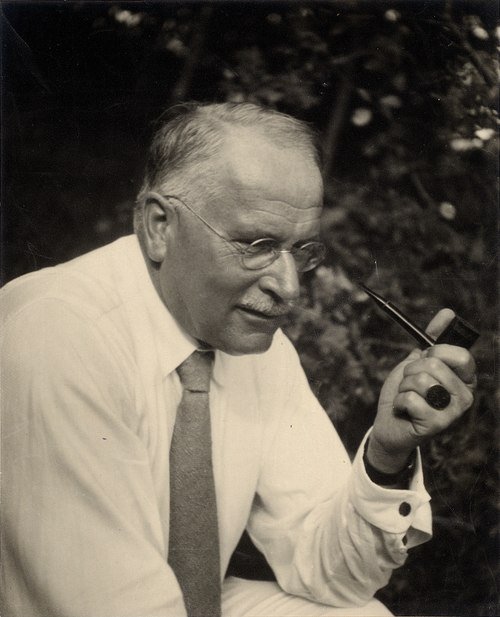
Carl Gustav Jung (July 26, 1875 – June 6, 1961), a Swiss psychologist and psychiatrist, is celebrated as one of the pivotal figures in the history of psychology. His groundbreaking work on archetypes, complexes, and synchronicity laid the foundation for modern analytical psychology.
Jung was born in Kesswil, Switzerland, to Johann Paul Achilles Jung and Emilie Preiswerk. Growing up in a family steeped in religious traditions, his early experiences deeply influenced his later theories about spirituality and the unconscious mind. Despite his father’s doubts about his son’s future success as a pastor or academic, Jung pursued studies at the University of Basel.
After graduating, he began his career as an assistant to Eugen Bleuler at the Burghölzli Mental Hospital in Zürich, where he conducted pioneering research on schizophrenia. This work led to his first major publication, The Psychology of Dementia Praecox, which established him as a leading thinker in psychiatry. Jung then went on to collaborate with Sigmund Freud and became the leader of the International Psychoanalytic Association until their professional relationship ended.
In 1903, Jung married Emma Rauschenbach, who supported his work both financially and emotionally. They had five children together. Despite the challenges of reconciling his personal life with his professional ambitions, Jung continued to develop his theories on the collective unconscious, which he introduced in Psychology and the Unconscious, published in 1916.
Jung’s legacy is marked by his innovative approach to psychology that transcended traditional boundaries. His writings, such as The Red Book (published posthumously), continue to inspire new generations of psychologists and philosophers. He died at the age of 85 after a long and influential career.
Common Questions
What was Carl Jung's relationship with Sigmund Freud?
Jung initially worked closely with Freud, who regarded him as his heir apparent in psychoanalysis. However, their collaboration ended in 1913 due to differences over the direction of Freud's theories and Jung's own evolving ideas.
What is Carl Jung's most famous work?
Jung’s most influential work includes Psychology and Alchemy, The Archetypes and the Collective Unconscious, and Synchronicity: An Acausal Connecting Principle. His seminal book, The Red Book, was published posthumously in 2009.
When did Carl Jung publish his first major work?
Jung's first significant publication, The Psychology of Dementia Praecox, appeared in 1907 while he worked at the Burghölzli Mental Hospital. It was a groundbreaking study that set him apart as an emerging expert in psychiatry.
How did Carl Jung's marriage to Emma Rauschenbach influence his career?
Emma Rauschenbach, who came from a wealthy family and inherited the Bollingen estate, supported Jung both financially and emotionally. This stability allowed him to focus on developing his theories without significant financial stress.
What is Jung's legacy in psychology?
Jung’s legacy lies in his introduction of concepts such as archetypes, the collective unconscious, and synchronicity, which have had a profound impact on psychology, philosophy, literature, and art. His work continues to influence diverse fields today.
What happened at the end of Jung's career?
Near the end of his life, Jung suffered from heart problems but continued working until shortly before his death in 1961. He died peacefully in Küsnacht, Switzerland, after a long and distinguished career.