 Germany
 Who is Felix Mendelssohn?
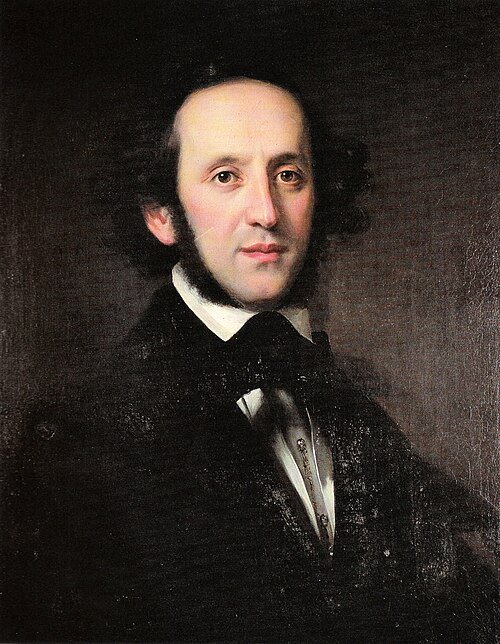
Felix Mendelssohn Bartholdy (February 3, 1809 – November 4, 1847) was a prodigious German composer, pianist, conductor, and musicologist whose work bridged the Classical and Romantic eras. Born into a prominent Jewish family that later converted to Christianity, Mendelssohn’s early life was marked by exceptional musical talent and a rigorous educational background.
Mendelssohn was born in Hamburg, Germany, to Abraham and Lea Mendelssohn Bartholdy, descendants of the renowned philosopher Moses Mendelssohn. The family moved to Berlin when Felix was young, where his father ensured he received an extensive education that included music lessons with Carl Friedrich Zelter. Under Zelter’s guidance, Mendelssohn developed a profound appreciation for Bach and Handel, influences that would shape much of his mature work.
By the age of 17, Mendelssohn had already composed several significant works, including the Overture to A Midsummer Night’s Dream. His career rapidly ascended with a series of successful concert tours across Europe. In 1829, at just 20 years old, he conducted the first public performance of Bach’s St Matthew Passion in Berlin since its original premiere, an event that significantly revived interest in Baroque music.
Mendelssohn’s professional life was marked by numerous milestones. He served as director of the Gewandhaus Orchestra in Leipzig from 1835 to 1847 and founded the Conservatorium there two years later. His compositions, including symphonies, concerti, oratorios, chamber music pieces, and songs, reflect his versatility and deep emotional resonance.
On a personal level, Mendelssohn married Cécile Jeanrenaud in 1842; they had five children together. Despite a relatively short life spanned by intense creative output and administrative duties, he managed to maintain a rich domestic life. Tragically, his premature death at the age of 38 from a stroke left an indelible mark on music history.
Mendelssohn’s legacy is one of profound influence and enduring popularity. His compositions continue to be staples in classical concert halls worldwide, celebrated for their lyrical beauty and technical mastery. The revival of interest in his work has solidified his place among the giants of Romantic-era composers.
Common Questions
What is Mendelssohn's birth date?
Felix Mendelssohn was born on February 3, 1809.
Who were Felix Mendelssohn's parents?
His parents were Abraham and Lea Mendelssohn Bartholdy.
What is one of his most famous works?
One of his most famous compositions is the Overture to A Midsummer Night's Dream, completed in 1826.
Where did Felix Mendelssohn study music?
He received musical training from Carl Friedrich Zelter, who was a prominent figure in Berlin's cultural scene.
What position did Mendelssohn hold in Leipzig?
Felix Mendelssohn served as the director of the Gewandhaus Orchestra in Leipzig from 1835 to 1847.
How old was Felix Mendelssohn when he died?
He passed away at the age of 38 on November 4, 1847.
What did Mendelssohn do for Bach's music?
Mendelssohn conducted the first public performance of Bach’s St Matthew Passion in Berlin in 1829 when he was just 20 years old, an event that significantly revived interest in Baroque music.
What is Mendelssohn's lasting impact on classical music?
His legacy includes a vast repertoire of compositions known for their lyrical beauty and technical mastery, making him one of the most influential Romantic-era composers.