 United States
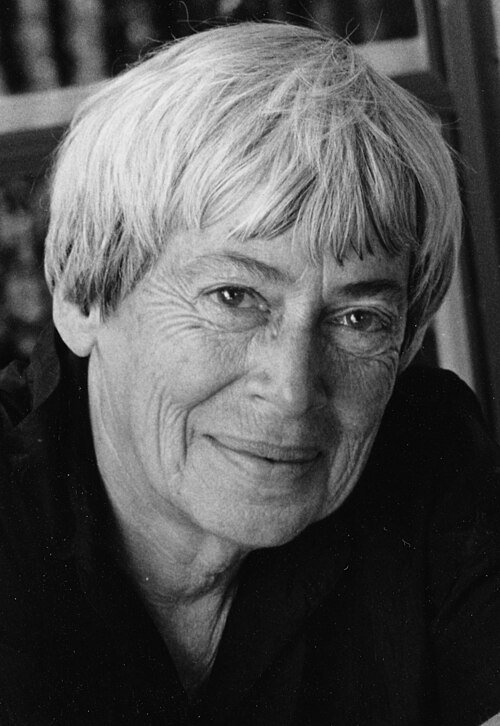
 Who is Ursula K. Le Guin?
Ursula K. Le Guin was a singular literary voice whose work reshaped the boundaries of speculative fiction. Born on October 21, 1929, in Berkeley, California, she became one of the most celebrated authors of her time until her passing on January 22, 2018.
Le Guin’s early life was marked by intellectual richness and cultural diversity. Her father, Alfred L. Kroeber, a renowned anthropologist, and mother, Theodora C. Kroeber, an accomplished author herself, imbued her with a deep appreciation for language, storytelling, and the intricacies of human culture. Growing up in Berkeley, she was surrounded by scholars and thinkers who influenced her keen interest in societal structures.
The rise of Ursula Le Guin’s career as a writer paralleled her academic pursuits at Harvard University, where she initially studied French literature before moving to Radcliffe College for further studies. After marrying Charles A. Le Guin in 1953, she settled into teaching and writing, publishing her first novel, Planet of Exile, in 1966 as part of the Hainish Cycle series that would become a cornerstone of science fiction literature.
Over decades, Le Guin’s literary contributions grew to include over two dozen books, numerous essays, and translations. She won multiple Hugo and Nebula awards for her works such as The Left Hand of Darkness (1969) and The Dispossessed (1974), which are celebrated for their intricate explorations of gender roles, political systems, and the complexities of human society.
Outside her professional life, Le Guin was a devoted mother to three children: Caroline, Theo, and Elisabeth. Her marriage to Charles lasted over six decades until his death in 2018. She was known for her warmth and intellect, balancing family with a prolific writing career that spanned several genres.
Ursula K. Le Guin’s legacy is one of profound influence on the world of speculative fiction and beyond. Her ability to weave complex social critiques into engaging narratives has left an indelible mark on literature. She passed away in 2018 after a heart attack, leaving behind not only a vast body of work but also a legacy of intellectual rigor and imaginative depth that continues to inspire readers around the globe.
Common Questions
What was Ursula K. Le Guin's early life like?
Le Guin grew up in Berkeley, California, surrounded by scholars and thinkers. Her parents, Alfred L. Kroeber and Theodora C. Kroeber, were both academics who instilled a love of language and culture.
What are some of Ursula Le Guin's most notable works?
Some of her most celebrated works include The Left Hand of Darkness (1969) and The Dispossessed (1974), both part of the Hainish Cycle series.
How did Ursula Le Guin's work impact literature?
Le Guin's work reshaped speculative fiction by exploring themes like gender roles, political systems, and social structures in innovative ways that continue to influence writers today.
What awards did Ursula K. Le Guin receive?
Throughout her career, she received numerous awards including multiple Hugo Awards and Nebula Awards for her novels The Left Hand of Darkness and The Dispossessed.
When did Ursula K. Le Guin pass away?
Ursula K. Le Guin passed away on January 22, 2018, due to a myocardial infarction.