 United Kingdom
 Who is Mahathir Mohamad?
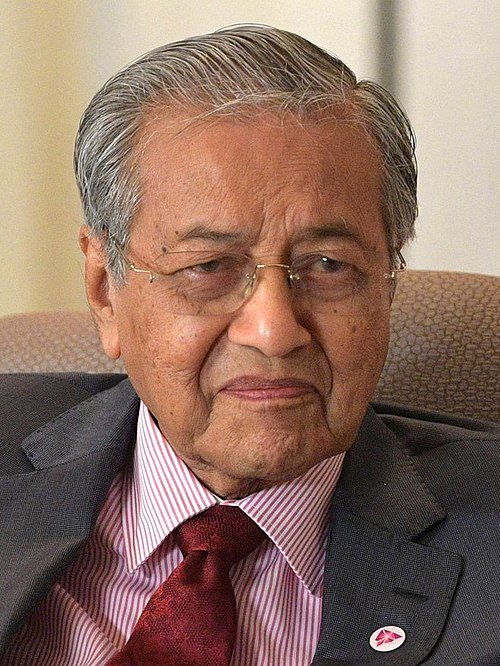
Mahathir Bin Mohamad, widely known as Dr. Mahathir or Tun Dr. Mahathir, emerged as one of Southeast Asia’s most influential and controversial leaders during his tenure as Prime Minister of Malaysia from 1981 to 2003, and again from 2018 to 2020. Born on July 10, 1925, in Alor Setar, Kedah, Malaysia, he grew up in a modest family that instilled strong values of hard work and resilience.
Mahathir’s early life was marked by academic success and a deep commitment to education. He earned his medical degree from the National University of Singapore’s Yong Loo Lin School of Medicine in 1953, setting the stage for a career that would span medicine, politics, and international diplomacy.
His political ascent began when he joined the United Malays National Organisation (UMNO) party, where he quickly rose through the ranks. Mahathir became Prime Minister on July 16, 1981, after being elected as UMNO’s president, and his tenure was characterized by rapid economic growth, controversial policies, and significant political reforms.
During his first period in power, Mahathir launched a series of ambitious projects aimed at transforming Malaysia into a developed nation. The Multimedia Super Corridor, the Petronas Twin Towers, and the creation of Putrajaya as the new administrative capital were among his notable achievements. He also introduced the New Economic Policy (NEP) to address ethnic inequalities.
Despite his often polarizing leadership style, Mahathir’s second term from 2018 until his retirement in February 2020 marked a return to power following a dramatic political shift. This period saw him leading Malaysia through significant economic and social challenges.
Beyond politics, Dr. Mahathir was married to Siti Hasmah Mohamad Ali, and the couple had seven children together: Marina, Mokhzani, Mukhriz, Mirzan, Melinda, Mazhar, and Maizura. His personal life has been closely intertwined with his political career, influencing many aspects of Malaysian society.
Mahathir’s legacy continues to shape Malaysia’s trajectory as a nation striving for economic independence and social equity. His impact on Southeast Asian politics remains significant, despite the controversies that often surrounded his policies and leadership style.
Common Questions
When did Mahathir Mohamad become Prime Minister of Malaysia?
Mahathir became Prime Minister on July 16, 1981.
What were some of the major projects initiated by Mahathir during his first term as Prime Minister?
During his first term, Mahathir launched significant infrastructure projects such as the Multimedia Super Corridor and the construction of the Petronas Twin Towers. He also established Putrajaya as Malaysia's new administrative capital.
How many children did Dr. Mahathir have?
Mahathir had seven children with his wife, Siti Hasmah Mohamad Ali.
What was the New Economic Policy (NEP) introduced by Mahathir?
The NEP aimed to address ethnic inequalities in Malaysia. It included affirmative action programs and economic reforms designed to uplift the Malay community and promote national unity.
When did Mahathir return as Prime Minister after stepping down in 2003?
Mahathir returned as Prime Minister on May 10, 2018, after a period of retirement from politics.