 Germany
 Who is Willy Brandt?
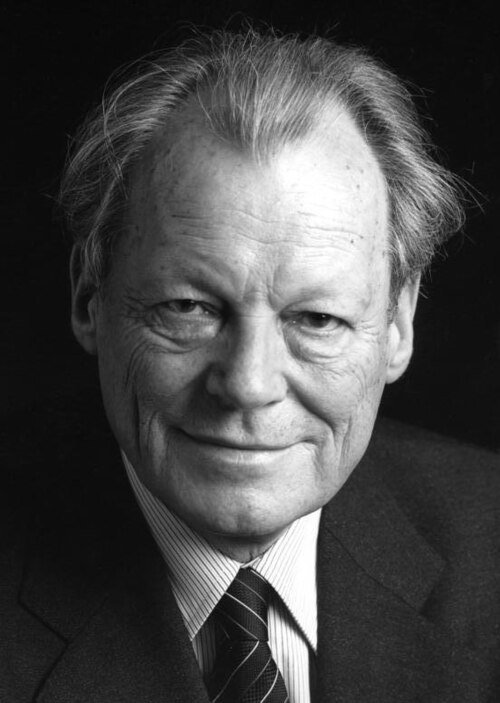
Herbert Ernst Karl Frahm, better known by his adopted name Willy Brandt, was a towering political figure whose career spanned the tumultuous decades of World War II and the Cold War. Born on December 18, 1913, in Lübeck, Germany, to Martha Frahm and a father who deserted the family when Herbert was just two years old, he grew up in modest circumstances, shaping his early political beliefs through direct experiences with fascism.
Brandt’s formative years were marked by his escape from Nazi Germany in 1933. He fled to Norway and later settled in Sweden before returning to a divided Berlin as the war ended. Here, he became involved in journalism and politics, eventually adopting the name Willy Brandt and joining the Socialist Workers’ Party of Germany (SPD).
His political career took off when he was elected Mayor of West Berlin in 1957, a position that solidified his reputation as an advocate for human rights and democracy. In 1964, Brandt became Chairman of the SPD and Chancellor of West Germany from 1969 to 1974. His tenure is most noted for his ‘Ostpolitik’, a series of policies aimed at improving relations with Eastern Europe, which culminated in him being awarded the Nobel Peace Prize in 1971.
Brandt’s personal life was marked by several marriages and a significant family legacy. He married Brigitte Seebacher in 1948; they had three children: Peter Brandt, Lars Brandt, and Matthias Brandt. His second marriage to Rut Brandt followed the divorce from Brigitte, though Rut died young after their separation. Later in life, he was briefly married to Anna Carlotta Thorkildsen.
Willy Brandt’s legacy is profound. He passed away on October 8, 1992, in Unkel, Germany, due to colorectal cancer. His diplomatic efforts during the Cold War era paved the way for improved relations between East and West, setting a precedent for future political dialogues. Today, he remains an iconic symbol of reconciliation and peace.
Common Questions
What was Willy Brandt's birth name?
Willy Brandt was born Herbert Ernst Karl Frahm in Lübeck, Germany.
When did Willy Brandt become Chancellor of West Germany?
Brandt became the Chancellor of West Germany on October 21, 1969.
What is Ostpolitik and why was it significant?
Ostpolitik refers to a series of policies initiated by Willy Brandt aimed at improving relations between West Germany and Eastern Europe. It was significant as it helped ease Cold War tensions.
How many children did Willy Brandt have?
Willy Brandt had three children: Peter, Lars, and Matthias Brandt with his first wife Brigitte Seebacher.