 Switzerland
 Who is Le Corbusier?
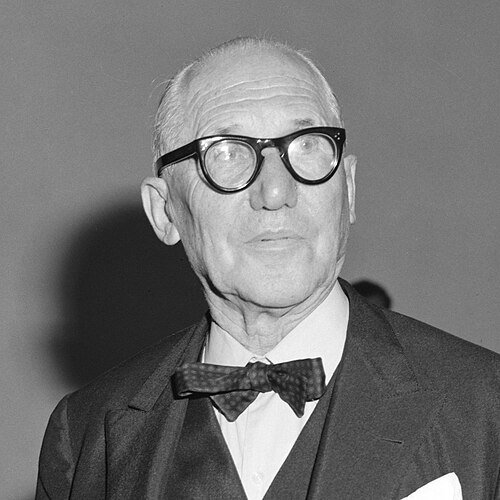
Charles-Édouard Jeanneret, better known by his pseudonym Le Corbusier (October 6, 1887 – August 27, 1965), was a Swiss-French architect and urban planner who played an instrumental role in shaping modern architecture. Born in La Chaux-de-Fonds, Switzerland, to watchmaker Georges-Édouard Jeanneret and his wife Émilie Charlotte Perruchoud, Le Corbusier grew up in a family that fostered creativity and craftsmanship.
During his formative years, he studied at the École d’Art in La Chaux-de-Fonds under architect René Chapallaz. Here, he honed his skills as an artist and craftsman, which would later inform his architectural philosophy. In 1907, Jeanneret left Switzerland to travel through Europe, working as a house painter and furniture designer while absorbing the diverse influences of European cities.
Le Corbusier’s career took off when he moved to Paris in 1917, where he embraced modernism with fervor. He met architect and designer Amédée Ozenfant, leading him to co-found the Purist movement in painting and architecture. By the late 1920s, Le Corbusier had established himself as a prominent figure in modern architecture with his theoretical writings such as Towards an Architecture (1923) and his design for the Weissenhof Estate in Stuttgart, Germany (1927).
Le Corbusier’s personal life was marked by a strong partnership with Yvonne Gallis, whom he married in 1937. They had no children together but remained committed to each other until his death. His brother Albert Jeanneret, also an architect, played a significant role throughout Le Corbusier’s career.
The latter part of Le Corbusier’s life saw him cementing his legacy with major architectural projects around the world, including the Unité d’Habitation in Marseilles (1947-1952) and Chandigarh, India (1950s). His work was often driven by a vision of urban planning that he believed would bring about social reform through architecture. Le Corbusier passed away on August 27, 1965, in Cap Martin near Menton, France, after suffering from myocardial infarction.
His influence extends far beyond his individual projects; Le Corbusier’s ideas and designs have inspired generations of architects and continue to shape the discourse around modern architecture and urbanism. His work embodies a relentless pursuit of functional beauty that remains relevant in contemporary discussions on design and city planning.
Common Questions
What were some of Le Corbusier's most significant architectural works?
Weissenhof Estate (1927), Unité d'Habitation in Marseilles (1947-1952), and his work on Chandigarh, India (1950s) are among his most recognized projects.
How did Le Corbusier's early education influence his architectural philosophy?
His studies at the École d'Art in La Chaux-de-Fonds under architect René Chapallaz helped shape his skills as an artist and craftsman, which later informed his architectural principles.
What was Le Corbusier's role in the Purist movement?
Le Corbusier co-founded the Purist movement with Amédée Ozenfant, emphasizing simplicity and functionality in art and design.
How did Le Corbusier contribute to urban planning theory?
He envisioned cities as a series of functional zones that separate different aspects of life such as work, residence, recreation, transportation, and social activities.
Who was Yvonne Gallis, and what role did she play in Le Corbusier's life?
Yvonne Gallis was Le Corbusier's wife whom he married in 1937. She played a supportive role in his personal life though they had no children together.
What is the significance of the Unité d'Habitation in Marseilles?
Unité d'Habitation, completed between 1947 and 1952, was a residential complex that embodied Le Corbusier's ideas on urban living with communal amenities and individual apartments designed for efficiency.
How did the death of Le Corbusier impact his legacy?
His sudden death in 1965 left an indelible mark on modern architecture, cementing his influence while also inspiring future generations to continue exploring his ideas and principles.